
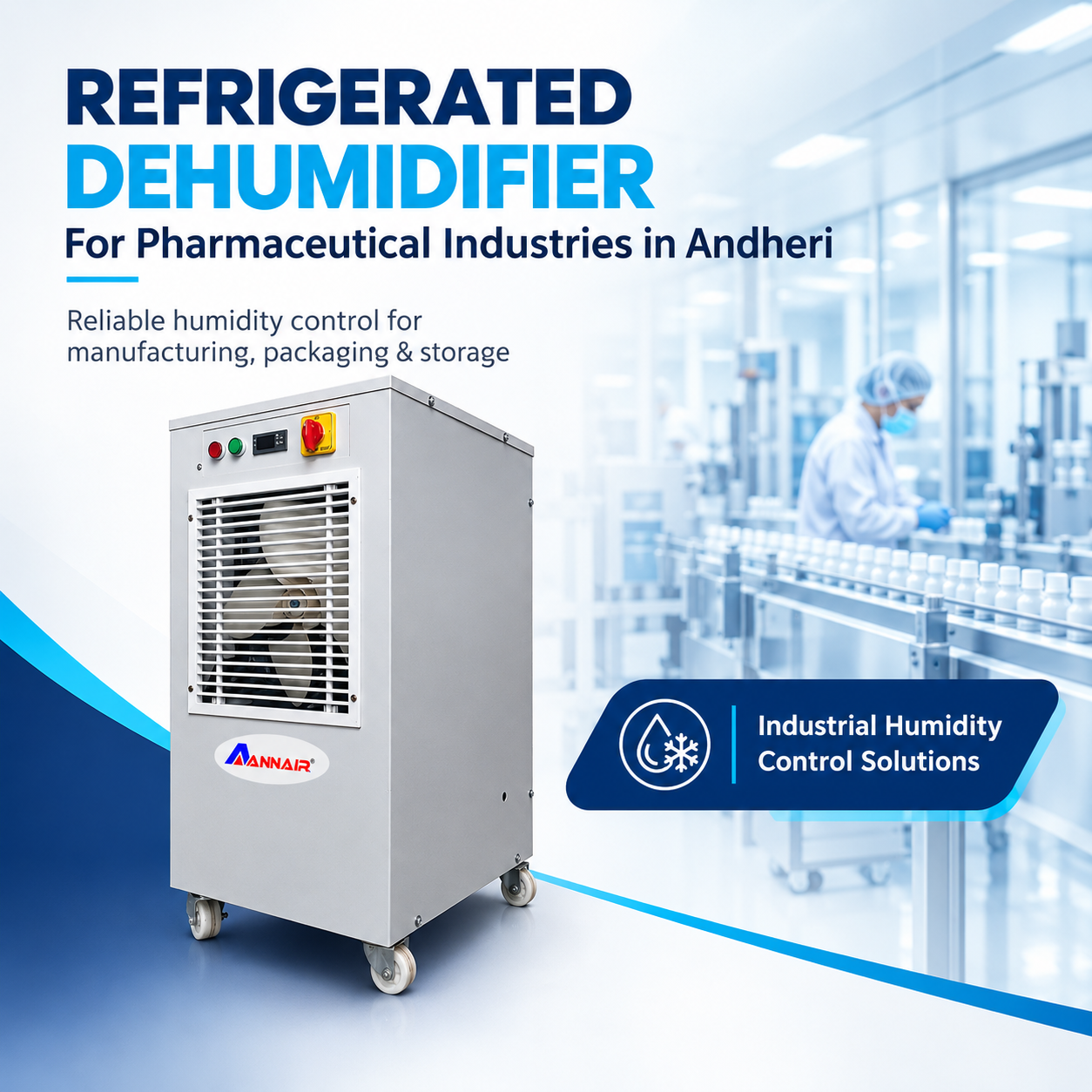
Refrigerated Dehumidifier for Pharmaceutical Industries in Andheri
Looking for a refrigerated dehumidifier for pharmaceutical industries in Andheri? Explore humidity control solutions from Annair Drychill Tech India Pvt. Ltd. Humidity control is important for pharmaceutical manufacturing, packaging, and storage. High moisture levels can affect product quality, packaging materials, equipment, and the working environment. Pharmaceutical companies need suitable humidity control solutions to maintain stable conditions in their facilities.
A refrigerated dehumidifier for pharmaceutical industries in Andheri can help manage excess moisture in suitable industrial environments. Annair Drychill Tech India Pvt. Ltd. provides industrial dehumidification solutions designed to support humidity control requirements across different industries.
Why Is Humidity Control Important in Pharmaceutical Industries?
Pharmaceutical facilities handle medicines, raw materials, packaging products, and other moisture-sensitive items. When humidity levels become too high, several problems may occur.
Excess moisture can affect powder handling, cause condensation on surfaces, damage packaging materials, and increase the risk of corrosion in metal equipment. It can also create conditions that encourage moulid growth in areas where moisture is not properly controlled.
For pharmaceutical companies in Andheri, selecting the right dehumidification system can help maintain suitable environmental conditions for production, packaging, and storage.
What Is a Refrigerated Dehumidifier?
A refrigerated dehumidifier removes moisture from the air by cooling it. When warm, humid air passes over a cold surface, some of its moisture condenses into water. The collected water is then drained away, and the treated air is released back into the environment.
This process helps reduce excess moisture in industrial spaces.
Refrigerated dehumidifiers are commonly considered for applications where the required humidity level and operating temperature can be achieved using cooling-based moisture removal. The right system depends on the room conditions, moisture load, and pharmaceutical process requirements.
Important: Some pharmaceutical applications require very low humidity levels. In such cases, a desiccant dehumidifier or a combined humidity control system may be more suitable than a refrigerated unit alone.
Uses of Refrigerated Dehumidifiers in Pharmaceutical Industries
1. Pharmaceutical Manufacturing Areas
Manufacturing environments may require controlled humidity to support consistent production conditions. A suitable dehumidification system helps manage excess moisture and reduces the chance of condensation in appropriate applications.
The system should be selected according to the product, manufacturing process, temperature, and required relative humidity.
2. Medicine Packaging Areas
Moisture can affect certain packaging materials and products during handling and packing. A refrigerated dehumidifier can help control humidity in packaging areas where cooling-based dehumidification meets the process requirements.
This can support more consistent packaging conditions and help reduce moisture-related production problems.
3. Pharmaceutical Warehouses
Pharmaceutical warehouses may store medicines, raw materials, cartons, labels, and packaging components that require specific environmental conditions.
A suitable dehumidifier helps manage excess moisture in the storage area. However, humidity requirements vary by product, so the storage conditions must follow the manufacturer's recommendations and applicable pharmaceutical quality requirements.
4. Raw Material Storage Areas
Some pharmaceutical raw materials can absorb moisture from the surrounding air. This may affect their handling, storage stability, or processing characteristics.
A properly selected humidity control system can help maintain the environmental conditions required for these materials.
5. Equipment and Utility Rooms
Humidity control may also be useful in selected utility rooms and equipment areas where condensation or moisture can affect metal components and electrical equipment.
The system should be sized according to the room's moisture load and operating conditions.
Benefits of Installing a Refrigerated Dehumidifier
Better Humidity Control
A refrigerated dehumidifier helps reduce excess moisture in suitable environments. This supports more stable conditions for manufacturing, packaging, and storage activities.
Reduced Condensation Problems
High humidity can cause condensation when moist air comes into contact with cold surfaces. Managing humidity can help reduce this problem when the system is correctly selected and installed.
Support for Product Quality
Certain pharmaceutical materials are sensitive to moisture. Maintaining the required environmental conditions helps reduce moisture-related risks during production and storage.
A dehumidifier alone, however, cannot guarantee product quality or pharmaceutical compliance.
Protection for Equipment
Excess moisture can contribute to corrosion and moisture-related issues in equipment rooms. Suitable humidity control can help protect equipment and the surrounding environment.
Improved Storage Conditions
A suitable dehumidification system helps maintain the required humidity range in storage areas when properly sized and operated.
Support for Production Efficiency
Uncontrolled humidity can contribute to packaging issues, condensation, and interruptions in some processes. Effective humidity management can help reduce these problems and support smoother operations.
How to Choose the Right Refrigerated Dehumidifier in Andheri
Before selecting a refrigerated dehumidifier for a pharmaceutical facility, consider the following factors.
Room size: The dimensions and volume of the area help determine the required system capacity.
Humidity requirement: Identify the target relative humidity based on the pharmaceutical process or stored product.
Operating temperature: Refrigerated dehumidifier performance depends on the air temperature and humidity entering the unit.
Moisture load: Consider moisture entering through doors, ventilation, people, materials, and production processes.
Air circulation: Proper air distribution helps the system manage humidity throughout the intended area.
Drainage: Condensed water needs a suitable drainage arrangement.
Maintenance: Filters, coils, drains, and other components should be checked according to the manufacturer's maintenance instructions.
Pharmaceutical requirements: The system must support the facility's environmental controls and quality procedures. Applications requiring very low humidity may need desiccant-based equipment.
Why Consider Annair Drychill Tech India Pvt. Ltd.?
Annair Drychill Tech India Pvt. Ltd. provides industrial cooling and dehumidification solutions for manufacturing and other industrial applications.
For pharmaceutical companies in Andheri, Mumbai, choosing a suitable dehumidification solution starts with understanding the application, room conditions, moisture load, and required humidity level.
Before finalising a system, discuss your room dimensions, operating temperature, target relative humidity, and application with the supplier. This information helps determine whether a refrigerated dehumidifier is suitable or whether another type of humidity control system is required.
Conclusion
A refrigerated dehumidifier for pharmaceutical industries in Andheri can help manage excess moisture in suitable manufacturing, packaging, storage, and equipment areas. Proper humidity control can reduce condensation problems, support product handling, and help maintain the required environmental conditions.
The key is to select a system that matches the actual process requirements rather than choosing equipment based on room size alone.
For pharmaceutical businesses in Andheri and across Mumbai, Annair Drychill Tech India Pvt. Ltd. can be contacted to discuss suitable industrial dehumidification solutions.
Frequently Asked Questions (FAQs)
1. What is a refrigerated dehumidifier used for in pharmaceutical industries?
It removes excess moisture from the air in suitable environments, including selected manufacturing, packaging, storage, and equipment areas.
2. Why is humidity control important in pharmaceutical manufacturing?
Humidity can affect moisture-sensitive materials, packaging, equipment, and certain manufacturing processes. Maintaining the required humidity helps support product quality and consistent operating conditions.
3. Is a refrigerated dehumidifier suitable for every pharmaceutical application?
No. Refrigerated dehumidifiers work best within their specified operating conditions. Processes requiring very low humidity may need a desiccant dehumidifier or a combined system.
4. How do I choose a refrigerated dehumidifier for a pharmaceutical facility in Andheri?
Consider room size, operating temperature, target relative humidity, moisture load, air circulation, and the specific needs of the pharmaceutical process.
5. Can a dehumidifier help reduce condensation?
Yes. By reducing excess moisture in the air, a properly selected dehumidifier can help reduce condensation under suitable conditions.
6. Does a refrigerated dehumidifier guarantee pharmaceutical compliance?
No. A dehumidifier is only one part of environmental control. Compliance depends on the complete facility design, monitoring, validation, maintenance, and applicable quality requirements.
7. Who can help me find an industrial dehumidifier in Andheri?
Annair Drychill Tech India Pvt. Ltd. can be contacted to discuss industrial dehumidification requirements and identify a suitable solution for your application.