
5 Signs Your Factory Needs an Industrial Dehumidifier
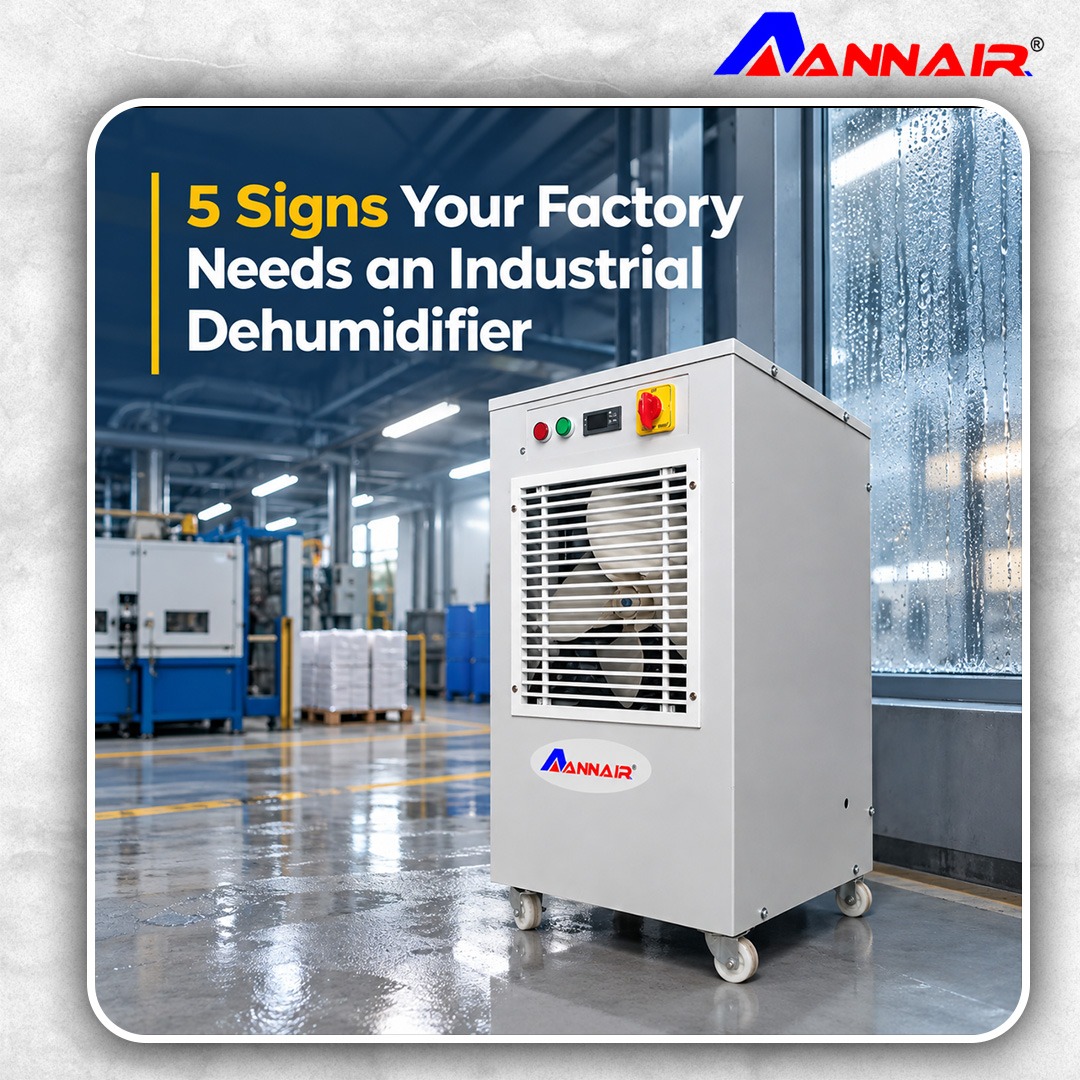
Discover 5 signs your factory needs an industrial dehumidifier and how humidity control can protect products, equipment, and manufacturing processes. High humidity inside a factory can affect production quality, equipment performance, raw materials, and the overall working environment. If moisture levels are not properly controlled, factories may experience condensation, corrosion, mold growth, product damage, and unexpected maintenance issues.
An industrial dehumidifier helps remove excess moisture from the air and maintain controlled humidity levels in industrial spaces. But how do you know when your factory actually needs one?
Here are 5 signs your factory needs an industrial dehumidifier.
1. You Notice Condensation on Equipment and Surfaces
Water droplets on machinery, pipes, walls, ceilings, electrical panels, or other surfaces are an important warning sign.
When warm, humid air comes into contact with a cooler surface, condensation can form. Over time, this moisture can contribute to corrosion, electrical problems, surface damage, and maintenance requirements.
An industrial dehumidifier can help control moisture levels and reduce the conditions that cause condensation.
2. Rust and Corrosion Are Increasing
Excess moisture is one of the major factors contributing to corrosion.
If you notice rust developing on machinery, tools, metal components, storage racks, or production equipment faster than expected, high humidity could be part of the problem.
Maintaining controlled humidity can help protect metal surfaces and support longer equipment life.
3. Your Products or Raw Materials Are Being Affected by Moisture
Different industries handle materials that can be sensitive to humidity.
Moisture can affect products, packaging, powders, chemicals, paper, textiles, pharmaceuticals, electronic components, and other materials. Depending on the application, high humidity can result in clumping, deterioration, mold formation, dimensional changes, or reduced product quality.
An industrial dehumidifier can help create a more stable production and storage environment.
4. You See Mould, Mildew, or Musty Odors
Persistent moisture can create conditions that encourage mold and mildew growth.
If certain areas of your factory, warehouse, or storage facility have a persistent musty smell or visible mold growth, humidity control should be investigated.
Reducing excess moisture with an industrial dehumidifier can help maintain a drier environment and support better hygiene and storage conditions.
5. Humidity Levels Keep Changing Throughout the Day
Humidity can change because of weather conditions, production processes, ventilation, temperature fluctuations, open doors, and moisture-generating operations.
If your factory experiences large changes in humidity during different shifts or seasons, relying only on natural ventilation may not provide consistent control.
An industrial dehumidifier can provide controlled moisture removal according to the requirements of the application.
Why Is Humidity Control Important in Industrial Facilities?
Humidity control is important wherever moisture can affect manufacturing, storage, equipment, or product quality.
A properly selected industrial dehumidifier can help:
Control excess moisture
Reduce condensation
Protect equipment from moisture-related corrosion
Support product and raw material quality
Reduce mold and mildew risks
Improve storage conditions
Maintain more consistent environmental conditions
Support sensitive manufacturing processes
The right solution depends on factors such as room size, temperature, humidity level, moisture load, air changes, application, and required humidity set point.
Where Are Industrial Dehumidifiers Used?
Industrial dehumidifiers are used across many manufacturing and storage applications.
Common applications include:
Pharmaceutical manufacturing: Humidity control can help protect moisture-sensitive materials and maintain controlled production environments.
Food processing and storage: Moisture control can help reduce condensation and protect certain products and packaging.
Textile manufacturing: Controlled humidity can support better material handling and production conditions.
Automotive manufacturing: Dehumidification can help protect components, equipment, and storage areas from excessive moisture.
Electronics manufacturing: Moisture control can be important for sensitive electronic components and production environments.
Warehouses and storage facilities: Dehumidification can help protect stored products and materials from moisture-related deterioration.
How Does an Industrial Dehumidifier Work?
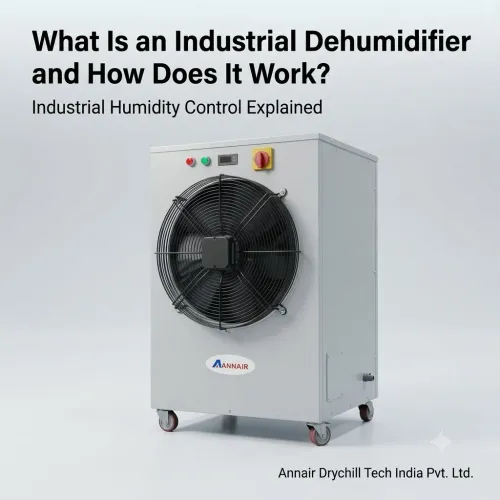
An industrial dehumidifier removes excess moisture from air to reduce the relative humidity of a controlled space.
Depending on the type of dehumidifier, moisture can be removed through technologies such as refrigeration-based dehumidification or desiccant dehumidification.
The appropriate technology depends on the operating temperature, required humidity level, room conditions, moisture load, and application requirements.
How to Choose the Right Industrial Dehumidifier
Before selecting a dehumidifier, consider:
1. Room size: Determine the volume of the area that needs humidity control.
2. Required humidity level: Identify the target relative humidity required for your process or storage application.
3. Temperature: Operating temperature can influence dehumidifier performance.
4. Moisture load: Consider moisture entering from production processes, people, open doors, ventilation, and other sources.
5. Application: Pharmaceutical, food, textile, automotive, electronics, and warehouse applications may have different requirements.
6. Operating conditions: Consider whether the unit will operate continuously, seasonally, or according to a specific production schedule.
A proper application assessment can help ensure that the selected industrial dehumidifier has the required capacity.
Industrial Dehumidifier Solutions from Annair
Annair Drychill Tech India Pvt. Ltd. provides industrial cooling and air treatment solutions for manufacturing and industrial applications.
If your factory is experiencing condensation, corrosion, mold, moisture-related product problems, or unstable humidity levels, an industrial dehumidifier may help improve environmental control.
The right solution should be selected according to your factory conditions, application, temperature, room size, and required humidity level.
Need help selecting an industrial dehumidifier for your factory? Contact Annair Drychill Tech India Pvt. Ltd. to discuss your application and humidity-control requirements.
Frequently Asked Questions
What is an industrial dehumidifier?
An industrial dehumidifier is a humidity-control system designed to remove excess moisture from air in industrial, manufacturing, warehouse, or storage environments.
Why does a factory need a dehumidifier?
A factory may need a dehumidifier when excessive humidity causes condensation, corrosion, mold, material damage, product-quality problems, or unstable environmental conditions.
What are the signs of high humidity in a factory?
Common signs include condensation, rust, mould or mildew, musty odours, moisture-damaged materials, and frequent fluctuations in humidity.
Can an industrial dehumidifier prevent condensation?
Humidity control can help reduce the conditions that lead to condensation. However, the system must be correctly sized and selected based on the room temperature, humidity, surfaces, and moisture load.
Which industries use industrial dehumidifiers?
Industrial dehumidifiers can be used in pharmaceutical, food and beverage, textile, automotive, electronics, chemical, manufacturing, warehouse, and other moisture-sensitive applications.
How do I choose an industrial dehumidifier?
Selection depends on room volume, temperature, current and target humidity, moisture load, application, operating conditions, and required dehumidification capacity.
Conclusion
Condensation, corrosion, mold, moisture-sensitive materials, and unstable humidity are all signs that your factory may need better moisture control.
An industrial dehumidifier can help maintain controlled humidity and protect products, materials, equipment, and storage areas from excessive moisture.
If you are facing humidity-related problems in your facility, start by identifying the source and level of moisture and then select a dehumidification system based on your actual application requirements.