
Heatless Air Dryer for Medical Air Systems
Medical facilities depend on clean, dry, and oil-free compressed air every hour of every day. Whether it is supporting ventilators, anesthesia machines, surgical equipment, or laboratory instruments, medical air plays a critical role in patient care. Any contamination, including moisture, can negatively affect equipment performance and increase maintenance requirements. This is why a heatless air dryer for medical air systems has become an essential component in modern healthcare facilities.
A heatless air dryer removes water vapor from compressed air using high-performance desiccant materials. Unlike refrigerated air dryers, which cool the air to remove moisture, heatless desiccant dryers achieve extremely low pressure dew points, making them ideal for medical applications where exceptionally dry air is required. Hospitals, pharmaceutical companies, dental clinics, and laboratories rely on these systems to maintain consistent air quality while complying with industry standards.
This comprehensive guide explains how heatless air dryers work, why they are important, their benefits, applications, selection criteria, maintenance requirements, and best practices for ensuring reliable performance.
Understanding Medical Air Systems
Medical air is a specially treated compressed air supply used throughout hospitals and healthcare facilities. It is produced by compressing atmospheric air and then filtering, drying, and monitoring it before distribution through a medical gas pipeline system.
Unlike ordinary industrial compressed air, medical air must meet strict quality requirements because it comes into contact with patients and sensitive medical equipment. Moisture, oil aerosols, solid particles, bacteria, and other contaminants must be controlled to ensure safety and reliability.
Healthcare facilities use medical air for numerous purposes, including respiratory therapy, anesthesia delivery, surgical instruments, neonatal care, intensive care units, dental equipment, and laboratory testing. Because compressed air travels through pipelines across the hospital, preventing condensation is essential.
Moisture inside compressed air systems can create corrosion, microbial growth, frozen pipelines in cold environments, malfunctioning instruments, and costly repairs. Installing a reliable heatless air dryer significantly reduces these risks while maintaining excellent air quality.
What Is a Heatless Air Dryer?
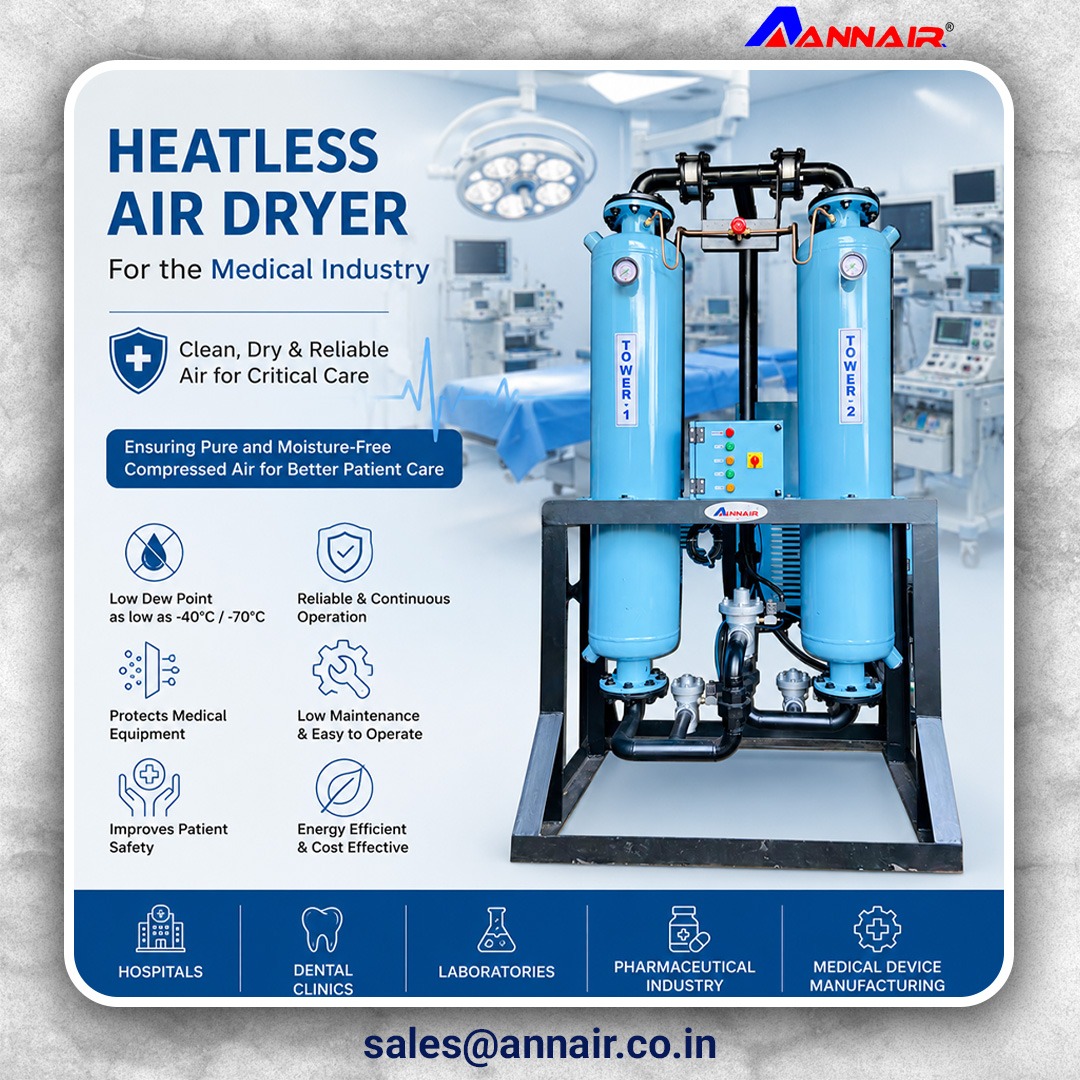
A heatless air dryer is a desiccant-based compressed air dryer that removes moisture by passing compressed air through adsorption media such as activated alumina or molecular sieves.
The dryer typically consists of two pressure vessels filled with desiccant. While one tower dries the compressed air, the other regenerates by releasing the absorbed moisture using a small portion of already dried compressed air. This alternating cycle allows continuous operation without requiring external heaters.
Working Principle
The operation follows four simple stages:
- Wet compressed air enters the dryer.
- Moisture is adsorbed by the desiccant.
- Dry air exits with a very low-pressure dew point.
- The second tower regenerates using purge air before switching roles.
Because the system uses no external heat source, it is known as a heatless dryer.
Main Components
| Component | Function |
|---|---|
| Desiccant Towers | Remove moisture from compressed air |
| Switching Valves | Alternate airflow between towers |
| Desiccant Material | Adsorbs water vapor |
| Controller | Manages drying and regeneration cycles |
| After Filters | Remove desiccant dust |
| Pre-Filters | Remove oil and particles before drying |
Why Medical Air Requires Dry Compressed Air
Dry compressed air is essential for maintaining the performance, safety, and longevity of medical systems. Even small amounts of moisture can have serious consequences over time.
Water vapor condenses inside pipelines as temperatures fluctuate. This condensation creates rust, bacterial growth, and contamination that may compromise patient safety. Moisture also damages sensitive pneumatic equipment, reduces instrument accuracy, and increases maintenance costs.
International healthcare standards emphasize the importance of supplying clean and dry compressed air. Hospitals commonly specify low pressure dew points to minimize the possibility of condensation under operating conditions.
Using a heatless air dryer for medical air systems helps ensure the following:
- Stable air quality
- Reliable equipment operation
- Reduced corrosion
- Lower maintenance costs
- Improved patient safety
- Longer equipment life
Benefits of Heatless Air Dryers
Reliable Low Dew Point
One of the greatest advantages is the ability to achieve pressure dew points as low as -40°C and, in many applications, -70°C. This level of dryness cannot normally be achieved by refrigerated air dryers.
Continuous Operation
Twin-tower technology allows one chamber to dry while the other regenerates, ensuring an uninterrupted supply of dry compressed air around the clock.
Simple Construction
Without heaters or refrigeration circuits, heatless dryers have fewer complex components. This simplifies maintenance and increases long-term reliability.
Energy Savings
Although heatless dryers consume purge air for regeneration, they eliminate the electrical energy required for heaters. Modern controller technology also optimizes purge cycles to improve overall efficiency.
Compact Installation
Their relatively compact footprint makes them suitable for hospitals where mechanical room space is often limited.
Applications in Healthcare
Heatless air dryers are widely used throughout the healthcare sector.
Hospitals
Hospitals use them for centralized medical air systems serving operating theaters, intensive care units, emergency departments, recovery rooms, and patient wards.
Dental Clinics
Dental compressors require dry compressed air to prevent moisture from entering handpieces and treatment equipment.
Pharmaceutical Manufacturing
Pharmaceutical production relies on extremely dry compressed air for packaging, process equipment, instrumentation, and cleanroom operations.
Laboratories
Laboratory analyzers, pneumatic controls, and research equipment require moisture-free compressed air for accurate results.
Medical Device Manufacturing
Manufacturers producing respiratory equipment, surgical instruments, and diagnostic devices depend on reliable desiccant dryers to maintain product quality.
How to Select the Right Heatless Air Dryer
Choosing the right dryer requires evaluating several important factors.
Air Flow Capacity
Select a dryer capable of handling the compressor's maximum airflow while allowing room for future expansion.
Pressure Dew Point
Medical facilities generally require low dew points. Confirm that the selected dryer consistently meets your required specification.
Operating Pressure
Ensure the dryer operates efficiently within the system's pressure range.
Inlet Air Conditions
Higher inlet temperatures and moisture loads affect dryer sizing. Proper sizing ensures stable performance.
Filtration
Install high-quality pre-filters to protect the desiccant from oil contamination and after-filters to capture any desiccant dust before air reaches the distribution system.
Installation and Maintenance Best Practices
Correct installation significantly improves dryer performance and extends equipment life.
Install the dryer downstream of the compressor and air receiver while providing sufficient ventilation and maintenance access. Use high-quality filtration before the dryer to prevent oil contamination of the desiccant.
Routine maintenance should include inspecting valves, replacing filter elements, checking controller operation, monitoring dew point performance, and replacing desiccant according to manufacturer recommendations. Preventive maintenance minimizes downtime and ensures consistent air quality for critical medical applications.
Monitoring system pressure, purge flow, and dew point allows maintenance teams to identify performance issues before they become major problems.
Conclusion
A heatless air dryer for medical air systems is a vital investment for hospitals, laboratories, dental clinics, and pharmaceutical facilities that require exceptionally clean and dry compressed air. By removing moisture through advanced desiccant technology, these dryers help prevent corrosion, contamination, equipment failure, and unnecessary maintenance while supporting reliable patient care.
Selecting the correct dryer involves evaluating airflow capacity, pressure dew point, filtration, operating conditions, and maintenance requirements. When properly installed and maintained, a heatless desiccant air dryer provides years of dependable performance, making it one of the most effective solutions for protecting medical air systems and ensuring compliance with healthcare air quality requirements.