
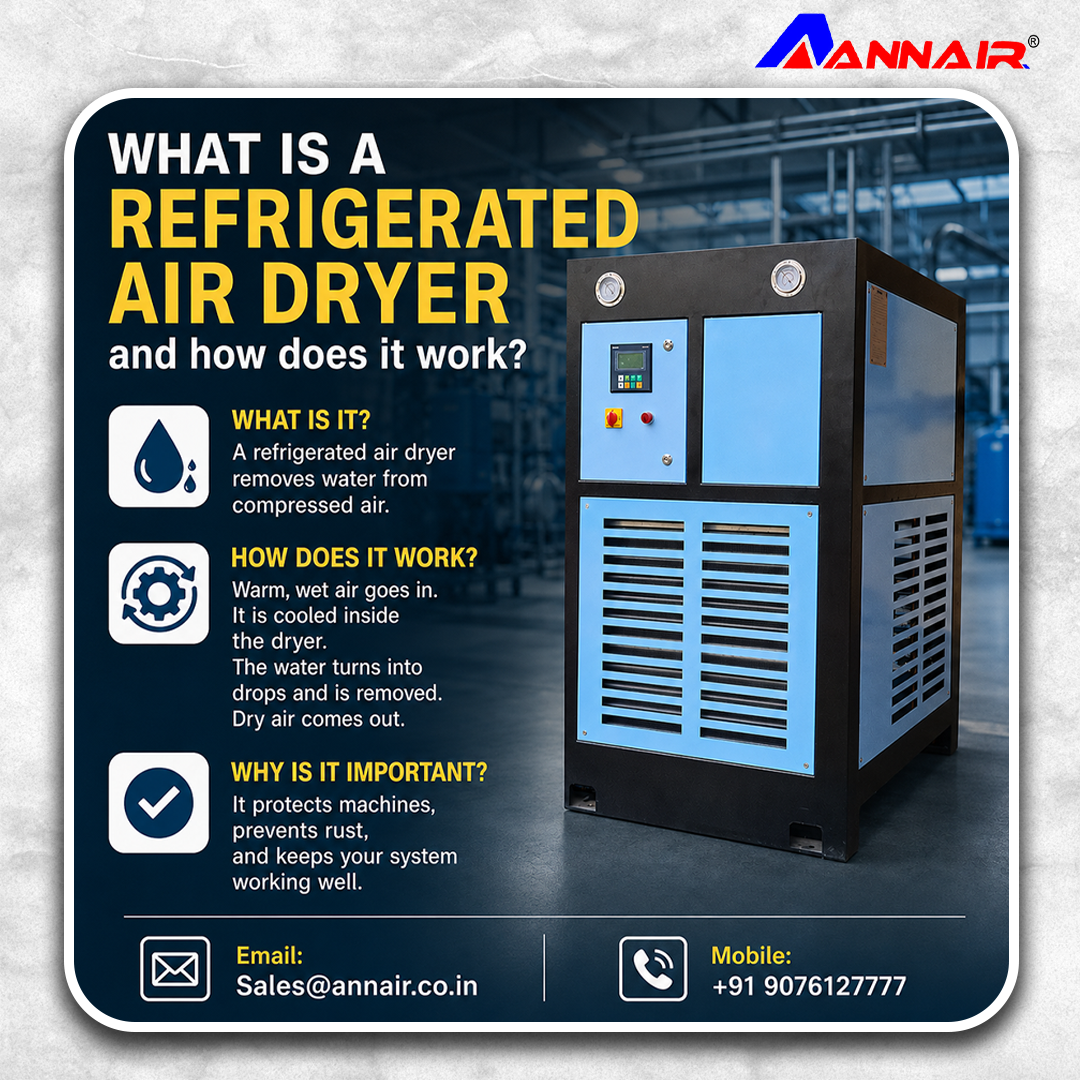
What Is a Refrigerated Air Dryer and How Does It Work?
Have you ever noticed moisture, rust, or sludge in your compressed air system? If so, you are dealing with a very common problem: water in your air lines.
Compressed air is vital for running tools, powering factory machinery, and spraying paint. However, when air is compressed, it traps a lot of water vapor. If you don't remove this moisture, it can ruin your tools, spoil your products, and cost you thousands of dollars in repairs.
That is where a refrigerated air dryer comes in.
In this guide, we will break down exactly what a refrigerated air dryer is, how it works, and why it is the most popular choice for businesses looking for clean, dry air.
What is a refrigerated air dryer?
A refrigerated air dryer is a mechanical system designed to remove moisture from compressed air by cooling it down. Think of it like a standard home refrigerator or air conditioner, but built specifically for your air compressor system.
It is the most common type of compressed air dryer used today because it is highly efficient, affordable to maintain, and incredibly reliable for general industrial applications.
Key Types of Refrigerated Air Dryers
When shopping for the best compressed air dryer, you will generally run into two types:
Cycling Dryers: These dryers turn on and off (or scale down) based on your actual air usage. They save a lot of energy if your demand fluctuates.
Non-Cycling Dryers: These run continuously at full capacity, regardless of the air demand. They are simpler, have a lower upfront cost, and offer a very consistent dew point.
How Does a Refrigerated Air Dryer Work? (Step-by-Step)
The science behind a refrigerated air dryer is simple: warm air holds more water than cold air. By rapidly cooling the air, the water vapor turns into liquid droplets that can be trapped and removed.
Here is exactly how the process works inside the machine:
Step 1: Air-to-Air Heat Exchanger (Pre-Cooling)
Warm, wet compressed air enters the dryer from the compressor. Before it hits the cooling system, it passes through the air-to-air heat exchanger. Here, the incoming warm air transfers some of its heat to the cold air that is leaving the dryer. This lowers the temperature of the incoming air slightly, making the next step much easier and saving energy.
Step 2: Air-to-Refrigerant Heat Exchanger (The Chiller)
Next, the pre-cooled air moves into the air-to-refrigerant heat exchanger. This is where the real magic happens. A refrigeration circuit (filled with coolant, just like your fridge) cools the compressed air down to about 3°C to 10°C (37°F to 50°F). Because cold air cannot hold moisture, the water vapor quickly condenses into liquid water droplets.
Step 3: Moisture Separation
The cold air, now full of liquid water droplets, flows through a moisture separator. This component uses centrifugal force or mechanical baffles to separate the liquid water from the air stream. The water falls to the bottom into an automatic drain valve, which discharges the water out of the system safely.
Step 4: Reheating and Re-entry
Finally, the cold, dry air passes back through the air-to-air heat exchanger (from Step 1). It is reheated by the incoming warm air. Reheating the air prevents your pipes from "sweating" (forming external condensation) as the air travels to your tools. The air is now clean, dry, and ready for use!
Why You Need a Refrigerated Air Dryer: The Benefits
Investing in a high-quality industrial air dryer offers massive benefits for your workshop or factory:
Protects Tools and Piping: Eliminates rust and corrosion inside your expensive pneumatic tools and piping system.
Improves Product Quality: Ensures no water droplets ruin paint jobs, contaminate food packaging, or spoil sensitive manufacturing processes.
Saves Money: Reduces equipment downtime and cuts down on maintenance costs.
High Efficiency: It provides the most cost-effective way to achieve a standard pressure dew point for general industrial uses.
Buying Guide: Choosing the Best Compressed Air Dryer
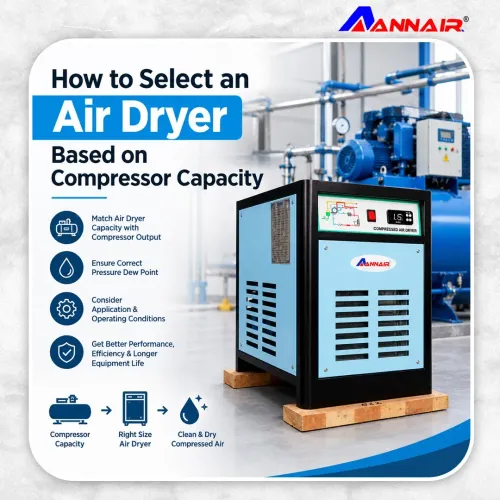
If you are looking to buy a refrigerated air dryer, you need to match it correctly to your air compressor. Keep these factors in mind:
| Feature | What to Look For |
| CFM Rating | Match the dryer’s CFM (Cubic Feet per Minute) to your compressor's output. Always buy a slightly larger dryer than your compressor to handle peak loads. |
| Max Pressure | Ensure the dryer can handle the PSI (pounds per square inch) of your system. |
| Dew Point Needs | Refrigerated dryers achieve a dew point of 3°C to 10°C. If you need bone-dry air (like for labs or sub-zero environments), you may need a desiccant air dryer instead. |
Top Features to Look For:
Auto-Drain Valves: Saves you from having to manually drain the water every day.
Energy-Saving Controls: Ideal if your air usage goes up and down throughout the day.
Heavy-Duty Heat Exchangers: Stainless steel or copper construction ensures a long lifespan.
Final Thoughts: Protect Your Investment Today
A refrigerated air dryer is not just an accessory; it is a necessity for any reliable compressed air system. By removing harmful moisture, you protect your tools, boost your productivity, and save your business from costly breakdowns.
Contact Us
Annair Drychill Tech India Pvt. Ltd.
📞 Call: +91 9076127777
🌐 Website: www.annair.com
📍 Location: India
Ambernath