
Common Applications of Refrigerated Air Dryers: Uses and Benefits
Compressed air is an essential part of many industrial operations. It powers pneumatic tools, controls machinery, supports production processes, and is used in applications where reliable air quality is important. However, compressed air naturally contains moisture. If this moisture is not removed, it can lead to corrosion, equipment problems, product-quality issues, and increased maintenance.
This is why refrigerated air dryers are commonly installed in compressed air systems. In this article, we explore the common applications of refrigerated air dryers, their uses and benefits, and why moisture control is important for different industries.
What Is a Refrigerated Air Dryer?
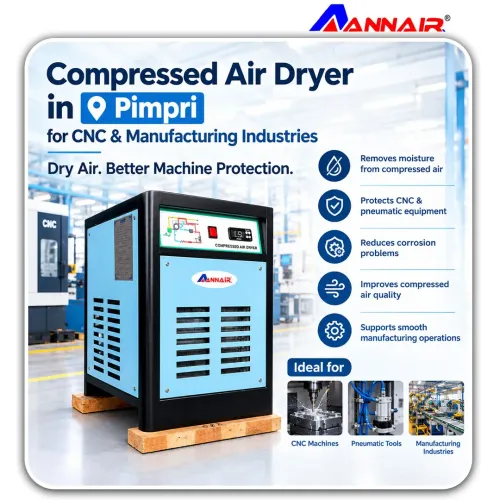
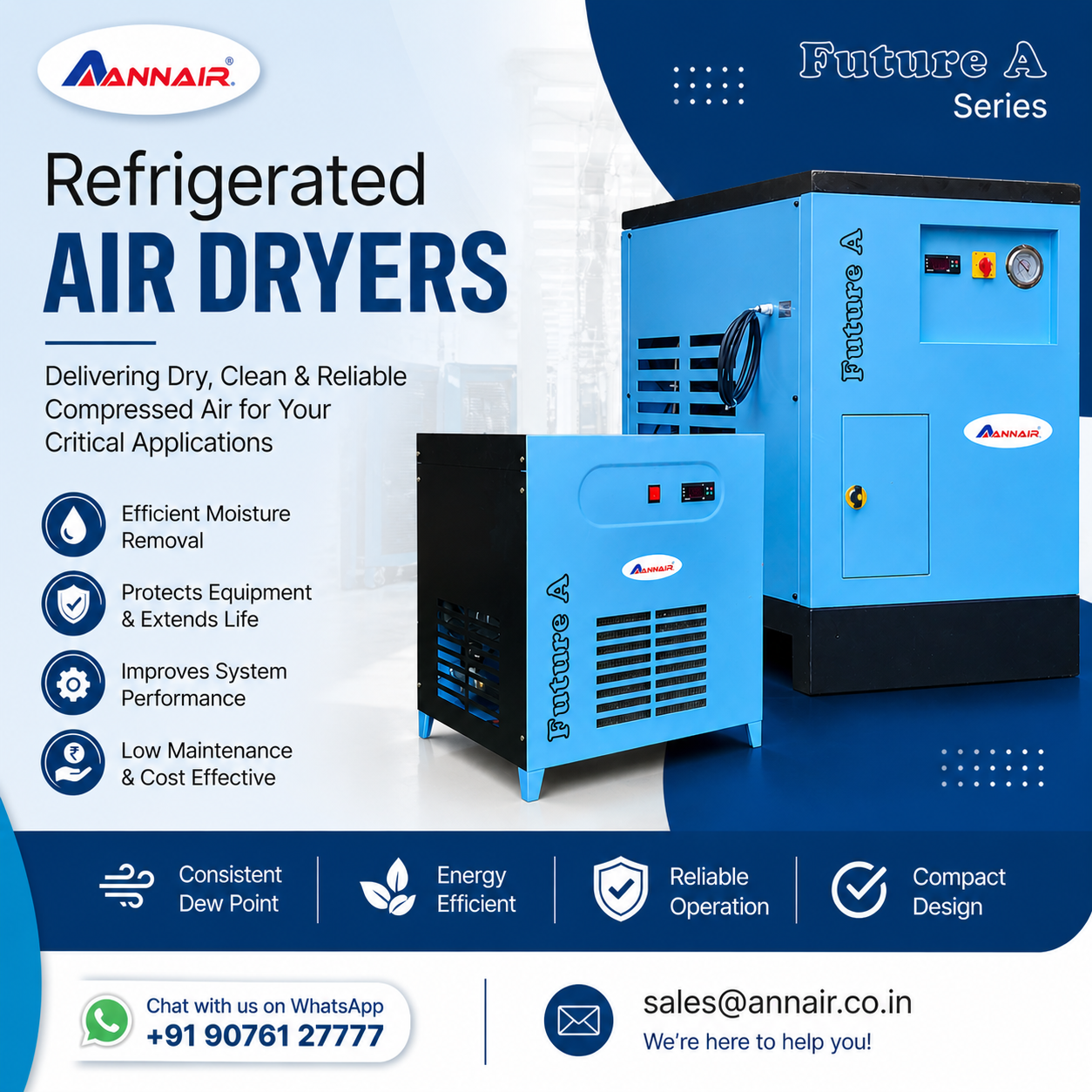
A refrigerated air dryer is a compressed air treatment device designed to reduce moisture from compressed air.
The dryer cools incoming compressed air to a low temperature. As the air cools, water vapour condenses into liquid water. This condensed moisture is then separated and removed from the system before the compressed air is supplied to downstream equipment.
After moisture has been removed, the dried compressed air is reheated before leaving the dryer. This process helps prevent unnecessary condensation in the compressed air distribution system.
Common Applications of Refrigerated Air Dryers
Refrigerated air dryers are suitable for a wide variety of industrial environments. Their applications depend on the required air quality, operating conditions, and production process.
1. Manufacturing Industries
Manufacturing facilities use compressed air for pneumatic tools, machinery, automation systems, cleaning applications, and production equipment.
Moisture in compressed air can affect pneumatic components and contribute to corrosion inside air lines. A refrigerated air dryer helps supply cleaner and drier air, supporting more dependable operation.
2. Automotive Industry
Compressed air plays an important role in automotive manufacturing and workshops. It can be used for pneumatic tools, assembly equipment, painting processes, cleaning, and automated production systems.
Removing excess moisture helps protect air-powered equipment and reduces the risk of water-related problems in compressed air lines.
3. Pharmaceutical Industry
Pharmaceutical manufacturing requires controlled production environments and reliable utilities. Compressed air may be used for automation, instrumentation, packaging, and other processes.
Where the application permits refrigerated drying technology, a refrigerated air dryer can help reduce moisture and support consistent compressed air quality. Specific air treatment requirements should be selected according to the process and applicable quality standards.
4. Food and Beverage Industry
Compressed air is used in various food and beverage operations, including packaging, automation, bottling, and processing equipment.
Moisture can create problems for pneumatic components and compressed air distribution systems. Refrigerated air dryers help reduce water content in compressed air and support smoother operation.
5. Textile Industry
Textile manufacturing often depends on compressed air for pneumatic machinery, automation, controls, and production equipment.
Excess moisture can affect equipment performance and contribute to corrosion. A refrigerated air dryer can help provide drier compressed air for suitable textile applications.
6. Packaging Industry
Packaging machines frequently use compressed air to operate cylinders, valves, actuators, and automated systems.
Moisture in the air supply can interfere with pneumatic components and increase maintenance requirements. A refrigerated air dryer helps reduce moisture before compressed air reaches the equipment.
7. Pneumatic Tools and Equipment
Many workshops and industrial facilities rely on pneumatic drills, grinders, impact wrenches, and other air-powered tools.
Dry compressed air helps reduce moisture-related issues inside pneumatic equipment and can contribute to more reliable operation.
8. General Industrial Compressed Air Systems
Refrigerated air dryers are also used in general-purpose compressed air systems where dry air is needed for machinery, controls, automation, and plant utilities.
Benefits of Refrigerated Air Dryers
- Reduced Moisture: Helps remove condensed moisture from compressed air.
- Protection Against Corrosion: Reducing water in the system helps protect air lines, fittings, valves, and other components.
- Better Pneumatic Equipment Performance: Drier compressed air can help maintain reliable operation of pneumatic components.
- Lower Moisture-Related Maintenance: Moisture control can reduce problems associated with water accumulation in compressed air systems.
- Improved Compressed Air Quality: Refrigerated drying provides suitable moisture control for many general industrial applications.
- Wide Industrial Application: Refrigerated air dryers can be used across manufacturing, automotive, packaging, textile, food and beverage, and other suitable industries.
Why Moisture Control Matters in Compressed Air Systems
Atmospheric air contains water vapour. When air is compressed, moisture can condense as the compressed air cools. Without suitable moisture control, water can travel through compressed air lines and reach downstream equipment.
Potential problems include:
- Corrosion in compressed air piping
- Damage to pneumatic components
- Moisture accumulation in equipment
- Increased maintenance
- Reduced system reliability
- Problems with certain production processes
Refrigerated Air Dryer vs. Desiccant Air Dryer
Refrigerated and desiccant air dryers use different methods to remove moisture from compressed air.
| Feature | Refrigerated Air Dryer | Desiccant Air Dryer |
|---|---|---|
| Moisture removal method | Cooling and condensation | Adsorption using desiccant material |
| Typical application | General industrial applications | Applications requiring very low dew points |
| Pressure dew point | Moderate | Very low |
| Typical use | Manufacturing, workshops, packaging and general industry | Specialized processes requiring extremely dry air |
The correct choice depends on the required pressure dew point, operating environment, air quality requirements, and specific application.
How to Choose a Refrigerated Air Dryer
Before selecting a refrigerated air dryer, several operating factors should be evaluated:
- Air Flow: Select a dryer suitable for the required compressed air flow.
- Operating Pressure: Check the working pressure of the air system.
- Inlet Air Temperature: Consider the temperature of compressed air entering the dryer.
- Ambient Temperature: Evaluate the installation environment.
- Required Pressure Dew Point: Determine how dry the air needs to be.
- Compressor Capacity: Ensure compatibility with the overall compressed air system.
Frequently Asked Questions About Refrigerated Air Dryers
What is the main purpose of a refrigerated air dryer?
Where are refrigerated air dryers commonly used?
Do refrigerated air dryers remove all moisture?
Why is dry compressed air important?
How does a refrigerated air dryer work?
Are refrigerated air dryers suitable for every application?
Conclusion
Understanding the common applications of refrigerated air dryers is important when designing or improving a compressed air system. From manufacturing and automotive production to packaging, textiles, food and beverage, and general industrial operations, refrigerated air dryers can help control moisture and protect downstream equipment.
By reducing water in compressed air, these systems can support reliable pneumatic operation, reduce corrosion-related problems, and help maintain consistent compressed air performance.
Annir Drychill Tech India Pvt. Ltd. provides compressed air drying solutions for industrial applications based on system requirements and operating conditions.
Frequently Searched Terms
- Common Applications of Refrigerated Air Dryers
- Refrigerated Air Dryer Applications
- Uses of Refrigerated Air Dryers
- Benefits of Refrigerated Air Dryers
- Industrial Air Dryers
- Compressed Air Dryers
- Refrigerated Compressed Air Dryer
- Dry Compressed Air
- Compressed Air Moisture Removal