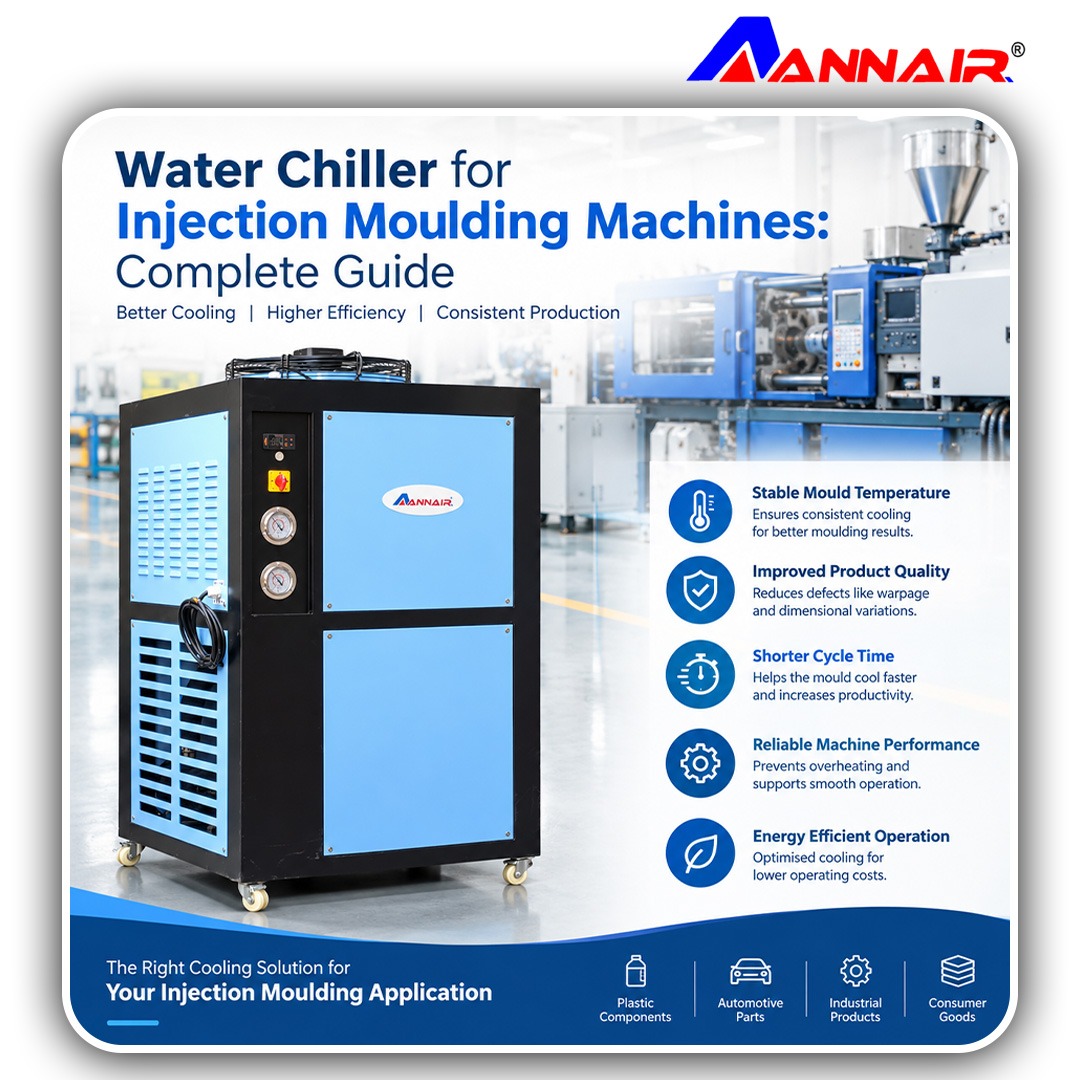
Water Chiller for Injection Moulding Machines: Complete Guide
Injection moulding is a widely used manufacturing process for producing plastic components with consistent shapes, dimensions and quality. During the moulding process, effective cooling is essential because the mould and process equipment generate heat continuously.
A water chiller for injection moulding machines provides controlled cooling water to help remove this heat efficiently. Maintaining the right cooling temperature can improve moulding consistency, reduce cycle time and support stable machine operation.
For plastic manufacturers, choosing the correct industrial water chiller is therefore an important part of building an efficient injection moulding process.
What Is a Water Chiller for Injection Moulding?
An industrial water chiller is a cooling system designed to remove heat from water or another process fluid and maintain it at a controlled temperature.
In an injection moulding application, chilled water is circulated through the mould cooling channels or other machine cooling circuits. The water absorbs heat and returns to the chiller, where the heat is removed before the cooled water is circulated again.
This continuous cooling cycle helps maintain a stable mould temperature during production.
Why Is Cooling Important in Injection Moulding?
Plastic material is heated until it becomes suitable for injection into the mould. After injection, the material needs to cool and solidify before the finished component can be removed.
If cooling is inconsistent, manufacturers may experience problems such as:
- Longer moulding cycles
- Dimensional variations
- Warpage
- Uneven surface finish
- Inconsistent product quality
- Excessive mould temperature
- Reduced production efficiency
A properly selected injection moulding machine chiller helps provide consistent cooling throughout the production process.
How Does a Water Chiller Work With an Injection Moulding Machine?
The basic process is straightforward.
The chiller cools the process water to the required temperature. A circulation pump then sends the cooled water toward the injection moulding machine and mould.
As the water passes through the cooling circuit, it absorbs heat from the mould or machine.
The warmer water then returns to the chiller. The chiller removes the absorbed heat and sends the cooled water back into circulation.
This continuous process provides controlled and repeatable cooling during production.
Uses of Water Chillers in Injection Moulding
A water chiller for plastic moulding machines can be used for several cooling requirements.
Mould Cooling
One of the main applications is mould cooling. Controlled water circulation helps remove heat from the mould after plastic injection.
Hydraulic Oil Cooling
Some injection moulding machines require cooling for hydraulic oil. A suitable cooling system can help maintain the required operating temperature.
Process Equipment Cooling
Depending on the machine configuration, chilled water can also support cooling requirements for associated process equipment.
High-Volume Plastic Production
Industries producing plastic components continuously can use industrial chillers to maintain consistent cooling conditions during long production runs.
Benefits of Using an Industrial Water Chiller
1. Better Temperature Control
A chiller provides controlled cooling water, helping maintain a more stable moulding process.
2. Improved Product Quality
Consistent cooling can help reduce dimensional variations, warping and other cooling-related moulding problems.
3. Reduced Cycle Time
Efficient heat removal can help the plastic component reach the required solidification condition faster, potentially reducing the overall moulding cycle.
4. Consistent Production
Stable cooling conditions help manufacturers maintain more consistent production results from one cycle to another.
5. Better Machine Performance
Controlling excessive heat can support the reliable operation of machine components and associated cooling circuits.
6. Suitable for Continuous Production
Industrial water chillers are designed for process cooling applications where cooling is required for extended operating periods.
How to Select the Right Chiller for an Injection Moulding Machine
Selecting a chiller should not be based only on the machine size. Several operating conditions should be considered.
Cooling Capacity
The chiller must have sufficient cooling capacity to remove the heat generated by the moulding process.
An undersized chiller may struggle to maintain the required water temperature, particularly during continuous production.
Required Water Temperature
Determine the required supply-water temperature for the mould and process before selecting the chiller.
Flow Rate
The required water flow depends on the cooling circuit and heat load. The chiller should provide adequate flow for effective heat transfer.
Ambient Conditions
Factory temperature can affect chiller performance. Applications in hot industrial environments may require additional consideration when selecting the equipment.
Operating Hours
A machine operating continuously for multiple shifts may have different cooling requirements from one operating for only a few hours each day.
Number of Machines
If one chiller will serve multiple injection moulding machines, the combined cooling load should be calculated carefully.
Water Quality
Water quality can affect heat exchangers, pipes and cooling circuits. Proper water treatment and maintenance can help reduce scaling and fouling.
Common Problems Caused by Inadequate Cooling
Using an unsuitable cooling system can create several production problems.
If the chiller capacity is too low, water temperature may increase during production. This can reduce cooling efficiency and affect cycle consistency.
Poor water circulation can create uneven cooling across the mould. This may contribute to dimensional changes or product defects.
A poorly maintained cooling system can also experience reduced heat-transfer efficiency due to scaling, blocked filters or dirty heat exchangers.
For these reasons, both chiller selection and regular maintenance are important.
Water Chiller Maintenance Tips
Regular maintenance helps maintain cooling performance and equipment reliability.
Check the water circulation and flow regularly. Inspect filters and strainers for blockage. Keep heat-transfer surfaces clean and monitor the operating temperature.
It is also useful to check for unusual pressure changes, leaks or abnormal operating conditions.
Following the manufacturer's recommended maintenance schedule can help identify potential problems before they affect production.
Why Choose Annair for Industrial Cooling Solutions?
Annair Drychill Tech India Pvt. Ltd. provides industrial cooling solutions for manufacturing and process applications.
Its water chiller range is designed for industrial cooling requirements where stable and reliable temperature control is important.
For injection moulding applications, the appropriate chiller capacity and configuration should be selected according to the machine, mould, operating conditions and required cooling load.
Manufacturers can discuss their application requirements with Annair to identify a suitable industrial water chiller solution.
Frequently Asked Questions
What is a water chiller used for in injection moulding?
A water chiller is used to provide controlled cooling water to the mould and, depending on the machine configuration, other cooling circuits. It helps remove process heat and maintain stable operating temperatures.
Why is chilled water important for injection moulding?
Chilled water helps remove heat from the mould efficiently. Stable cooling can improve product consistency and help control the moulding cycle.
Can one chiller cool multiple injection moulding machines?
Yes, a properly sized industrial chiller can be designed to serve multiple machines. The combined cooling load, flow requirements and operating conditions must be considered during selection.
How do I calculate the required chiller capacity?
Chiller capacity depends on factors such as heat generation, cooling-water temperature, flow rate, production conditions and the number of machines being cooled. The application should be evaluated before selecting the chiller.
What happens if the chiller is undersized?
An undersized chiller may not maintain the required water temperature during continuous operation. This can result in inconsistent cooling and potentially affect production quality and cycle time.
How often should an injection moulding chiller be maintained?
Maintenance frequency depends on operating conditions, water quality and manufacturer recommendations. Regular inspection of filters, water circulation, heat-transfer surfaces and operating parameters is important.
Is an industrial water chiller suitable for plastic manufacturing?
Yes. Industrial water chillers are commonly used for process cooling applications in plastic manufacturing, including injection moulding.
Conclusion
A reliable water chiller for injection moulding machines can play an important role in maintaining stable cooling conditions during plastic production. Proper temperature control can support consistent product quality, efficient mould cooling and reliable machine operation.
When selecting a chiller, manufacturers should consider cooling capacity, water temperature, flow rate, ambient conditions, operating hours and the number of machines connected to the cooling system.
For plastic manufacturers looking for an industrial cooling solution, Annair Drychill Tech India Pvt. Ltd. can help evaluate the application and identify an appropriate water chiller solution.
Need an industrial water chiller for your injection moulding application? Contact Annair Drychill Tech India Pvt. Ltd. to discuss your cooling requirements.