
Auto Drain Valve for Compressed Air Systems: Uses, Benefits, and How to Choose One
Every compressed air system generates condensate, and someone or something has to get rid of it. An auto drain valve does that job automatically, discharging accumulated water from tanks, filters, and dryers without a technician opening a manual valve every shift. It's a small component, but a poorly chosen or badly maintained one is one of the most common reasons compressed air systems end up with rust, waterlogged lines, and unplanned downtime.
What Is an Auto Drain Valve?
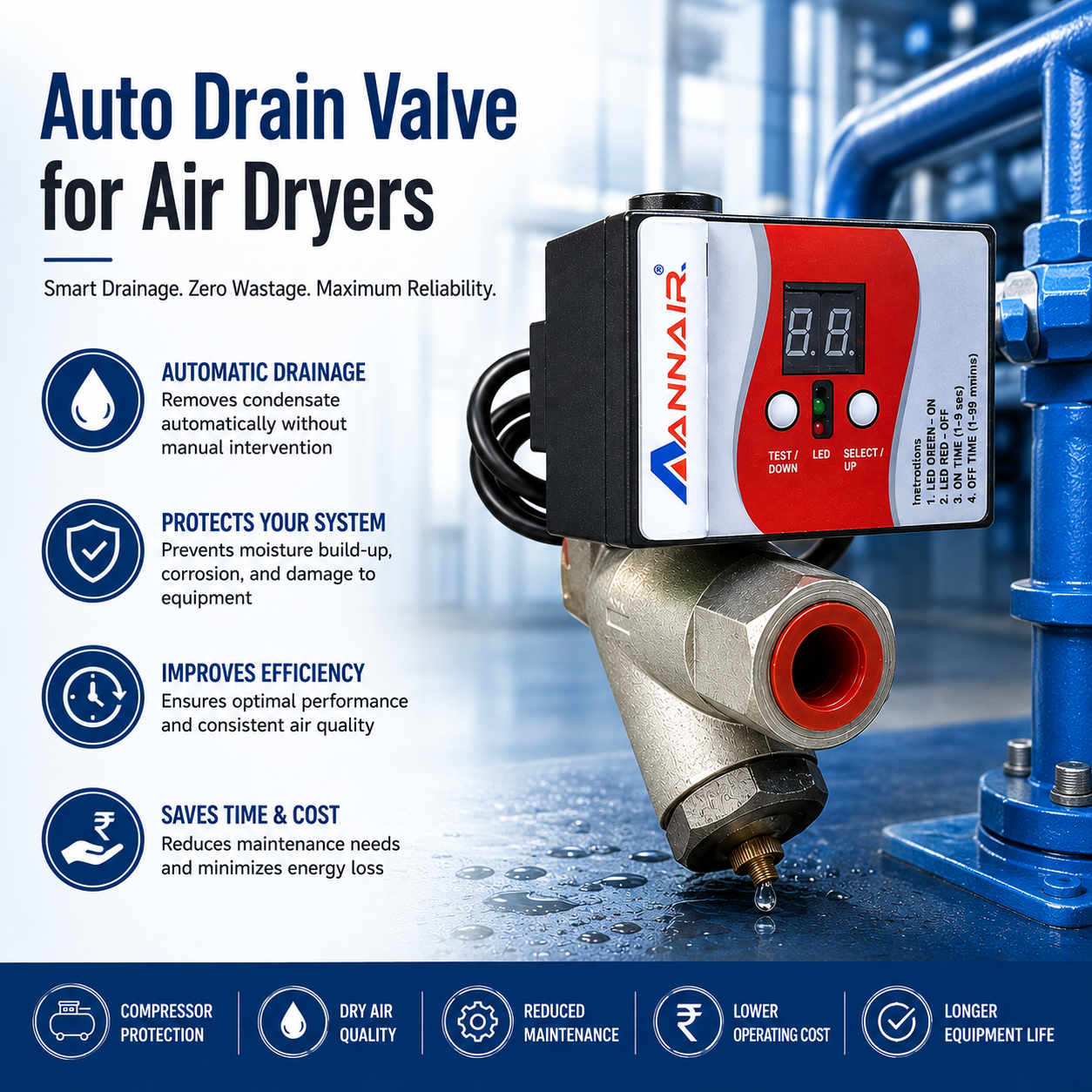
An auto drain valve is a device fitted to a compressed air receiver tank, filter housing, or air dryer that opens on its own to release accumulated condensate, then closes again before any compressed air escapes with it. Compressed air always carries moisture, and as that air cools inside tanks and pipework, the water vapor condenses into liquid. Left to sit, this condensate mixes with oil and rust particles and settles at the lowest point of the system. Without a reliable drain, that water either has to be released manually or it simply builds up until it causes damage.
Types of Auto Drain Valves
- Timer-based (solenoid) drains—open on a fixed timer, regardless of how much condensate is actually present. Simple and low-cost, but it can waste compressed air by opening when there's little or no water to drain.
- Float-operated drains—open only when condensate reaches a set level inside the valve body, so they don't waste air on empty cycles. Prone to clogging if the system carries a lot of debris or oil sludge.
- Zero air-loss drains—use a float or electronic level sensor combined with a design that discharges condensate without releasing any compressed air, ideal for larger systems where air loss adds up to real energy cost.
- Pneumatically operated drains—run entirely on the system's own air pressure, needing no external electricity, which makes them useful in areas where power isn't available or where electrical components aren't permitted.
Where Auto Drain Valves Are Used
- Compressed air receiver tanks, at the lowest point where condensate collects
- Refrigerated and desiccant air dryers, downstream of the drying stage
- Coalescing and particulate filter housings, where separated moisture and oil accumulate
- Drip legs on long compressed air pipe runs
- Aftercoolers and intercoolers on multi-stage compressors
Benefits of an Auto Drain Valve
- Prevents corrosion—removes standing water before it rusts tanks and pipework from the inside
- Protects downstream equipment—keeps condensate out of pneumatic tools, valves, and instrumentation
- Removes the manual task—no technician has to remember to open a drain cock every shift
- Reduces compressed air waste—float and zero air-loss types drain condensate without dumping usable air along with it
- Improves product quality—in food, pharma, and electronics applications, keeps moisture from reaching the process
- Lowers maintenance cost over time—prevents the corrosion and fouling that lead to expensive tank and pipework replacement
How to Choose the Right Auto Drain Valve
| Factor | What to Check |
|---|---|
| Condensate volume | High-volume systems suit float or zero air-loss drains over basic timer drains. |
| Debris and oil content | Systems with heavy oil carryover need a drain design resistant to clogging. |
| Power availability | Pneumatic drains suit areas without reliable electrical supply. |
| Thread size and connection | Must match your tank, filter, or dryer's outlet port to avoid adapters and leak points |
| Operating pressure rating | Confirm the valve is rated for your system's maximum working pressure, not just typical pressure. |
Annair's Auto Drain Valves
Annair Drychill Tech India Pvt. Ltd. manufactures automatic drain valves at our MIDC Ambernath facility, built to work alongside our air dryers, water chillers, and filtration equipment or fitted to existing compressed air systems. We supply OEM compressor manufacturers, panel builders, and industrial end users across India and the UAE, and every valve is matched to the customer's condensate volume and connection size rather than sold as a one-size-fits-all part.
Need the right auto drain valve for your system?
Talk to Annair on WhatsAppFrequently Asked Questions
What is the difference between a timer drain and a float drain?
A timer drain opens on a fixed schedule regardless of condensate level, which can waste compressed air. A float drain opens only when condensate actually accumulates, making it more air-efficient but more prone to clogging with debris.
Do auto drain valves waste compressed air?
Basic timer drains can, since they open on a schedule rather than on actual condensate presence. Float and zero-air-loss drains are designed specifically to release only water, not compressed air.
Where should an auto drain valve be installed?
At the lowest point of receiver tanks, filter housings, dryer outlets, and drip legs on long pipe runs, anywhere condensate naturally collects under gravity.
Can an auto drain valve work without electricity?
Yes. Pneumatically operated drain valves run entirely on the system's own compressed air pressure and need no external power source.
How often does an auto drain valve need maintenance?
Most drains need periodic cleaning to clear debris and oil buildup from the valve seat, typically every few months depending on how much contamination the system carries. Skipping this is the most common reason a drain valve stops working.
What happens if a compressed air system has no drain valve?
Condensate accumulates inside the tank and pipework, leading to internal corrosion, water carried downstream into tools and instrumentation, and eventually tank failure or product contamination.
Final Word
An auto drain valve is a small part with an outsized effect on how long your compressed air system lasts. Match the valve type to your condensate volume and debris load, size the connection correctly, and keep it on a maintenance schedule, and it will quietly protect your equipment for years without another thought.