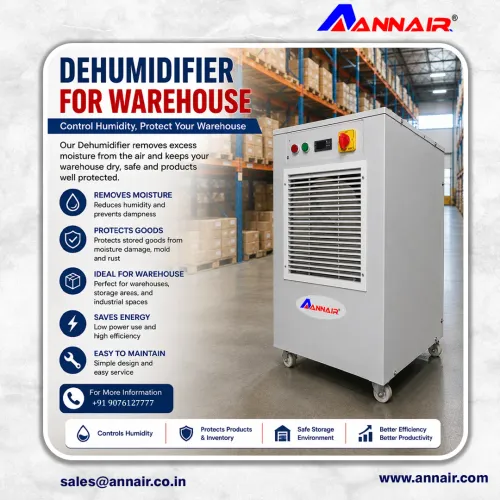


Dehumidifier for Food Storage: What Actually Protects Your Product
Moisture doesn't announce itself. One day your dry goods look fine. A few weeks later, you're pulling clumped powder off the line or tossing pallets that smell off. I've walked enough warehouse floors to know this story repeats itself constantly.
Here's the thing. Humidity isn't a side issue in food storage. It's the main event.
Why Humidity Is the Real Threat
High moisture speeds up spoilage. It feeds mold. And in cold storage, it shows up as condensation, fog, and ice buildup on floors and equipment — which isn't just a product problem. It's a safety one too. Wet, slippery floors near a loading dock are how someone gets hurt on a normal Tuesday.
You don't need fancy sensors to catch the symptoms, either. Frost creeping onto freezer coils. Bags of flour that feel heavier than they should. Condensation dripping off overhead pipes after a washdown. Different symptoms, same root cause.
What Humidity Range Should You Actually Target?
This depends a lot on what you're storing. Dry goods behave differently than powders, and powders behave nothing like anything sitting near a freezer.
For dry goods—grains, cereals, pasta, and dried fruit—you generally want relative humidity under 60%. Go above that and you're inviting mold and pests. Powders are trickier. Milk powder, coffee powder, spice blends — these need much tighter control, because excess moisture causes caking and clumping that jams up automated packaging lines. That's not just a quality issue. That's downtime.
Cold zones play by their own rules entirely. Freezer areas usually need relative humidity kept under 30% to stop frost from building up on evaporators and product surfaces. Less frost means fewer defrost cycles, and fewer defrost cycles means lower energy bills.
Desiccant or Refrigerant? It Depends on Your Zone
This is where a lot of buyers get stuck. Let me make it simple.
Refrigerant dehumidifiers pull moisture out by cooling air down to its dew point. They work well, and they're the more affordable option to run day to day. But they lose effectiveness fast in cold environments — the colder it gets, the harder they have to work, and eventually they just can't keep up.
Desiccant units solve that problem differently. No compressor, no refrigerant coil. That means they keep performing even in genuinely cold spaces, which makes them the better fit near freezers or chilled processing zones.
So here's the practical version, plant-floor style:
Warm ambient storage, dry ingredient rooms, general warehousing? Refrigerant usually gets the job done, and it costs less to operate.
Cold rooms, freezer anterooms, blast-freezing zones, anything running below roughly 15°C? That's desiccant territory. Tighter moisture control, steadier performance, no icing headaches.
Don't assume one technology wins everywhere. It doesn't. Match the equipment to the zone — not the other way around.
How Do I Know What Size or Type I Need?
Honestly? You need someone to walk your facility. Room temperature, target humidity, how often doors open, air exchange rates—all of it factors into sizing. Guess here and you'll pay for it twice: once when you underspec and spend years chasing moisture problems, and again when you overspec and burn cash on capacity you never needed.
Getting It Right the First Time
We've seen what happens when the wrong dehumidifier ends up in the wrong zone. It's rarely cheap to fix after the fact, and it's almost never a quick fix either.
If you're weighing options for a storage facility or a processing line, we're happy to walk through your specific conditions with you—no guesswork, no generic spec sheet pushed your way.
Contact us for a quote or consultation.
📞 +91 9076127777
🌐 www.annair.co.in
📧 sales@annair.co.in
📍 Ambernath MIDC, Thane, Maharashtra, India