
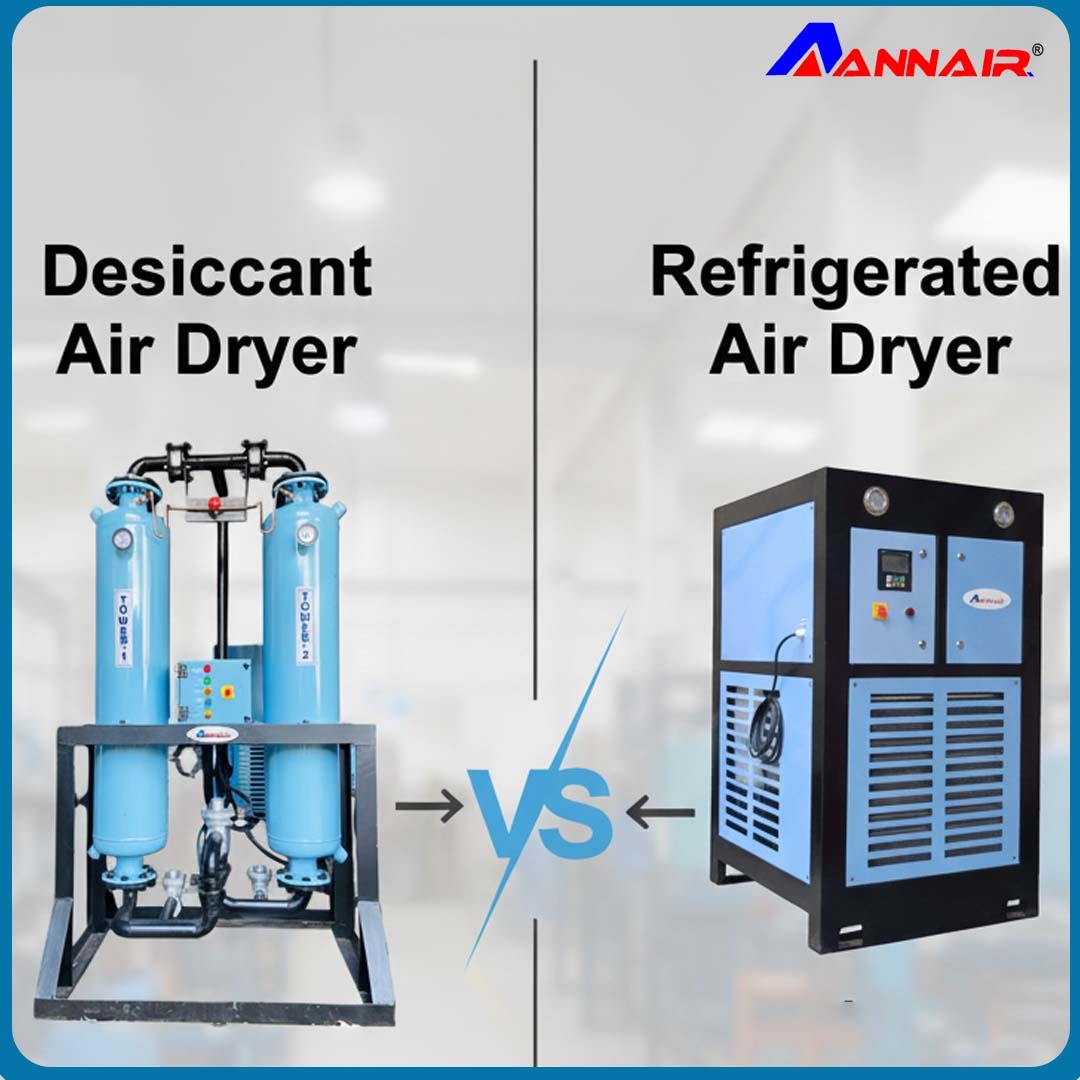
Desiccant vs. Refrigerated Air Dryers | Annair Air Treatment
Compare Desiccant vs Refrigerated Air Dryer. Learn differences, advantages, and applications to choose the best air dryer for your industry with Annair.
Desiccant vs. Refrigerated Air Dryers: Which One Should You Choose?
When designing a reliable compressed air system, one of the most important decisions is selecting the right air dryer. Moisture in compressed air can cause corrosion, blockages, and product contamination leading to costly downtime. Two of the most commonly used technologies are the Desiccant vs. Refrigerated Air Dryers
But how do you know which one is right for your industry? In this guide, we’ll compare both systems in detail, covering working principles, advantages, differences, and applications. By the end, you’ll be able to make an informed choice that improves efficiency and reduces costs.
Why Do You Need an Air Dryer?
Compressed air naturally contains water vapor. When compressed, this vapor becomes concentrated, leading to problems such as:
-
Rust and corrosion in pipelines and machinery
-
Damage to pneumatic tools and equipment
-
Reduced product quality in food, beverage, and pharma industries
-
Increased maintenance and operational costs
-
Production downtime due to air system failure
👉 To eliminate these issues, industries install air dryers ensuring clean, moisture-free compressed air supply.
What is a Refrigerated Air Dryer?
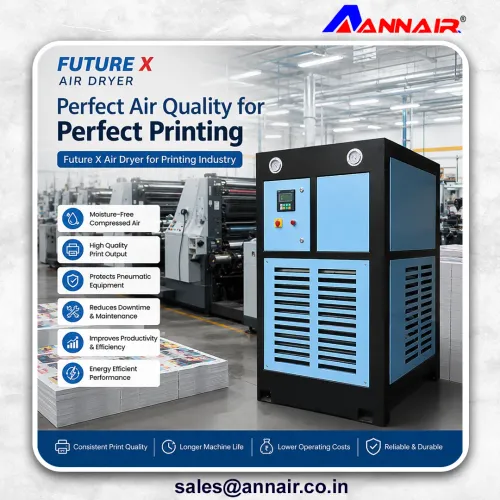
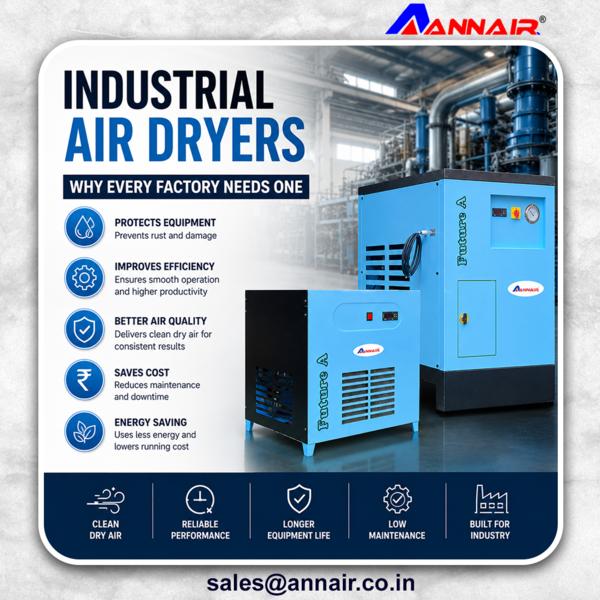
A Refrigerated Air Dryer is the most widely used solution for removing moisture.
-
Working Principle: It cools compressed air to around 3-5°C. At this low temperature, water vapor condenses into liquid droplets. A separator then removes the condensed water, and dry air is delivered to the system.
-
Applications: Automotive workshops, textile units, food packaging, chemical industries, and general-purpose manufacturing.
✅ Advantages of Refrigerated Air Dryers:
-
Affordable and energy-efficient
-
Simple to install and maintain
-
Compact design, requiring less space
-
Long operational life with low running cost
-
Suitable for 70–80% of industrial applications
What is a Desiccant Air Dryer?
A Desiccant Air Dryer, also known as an adsorption dryer, is designed for industries that need extremely dry air with a very low dew point.
-
Working Principle: Compressed air passes through a chamber filled with desiccant material (silica gel, activated alumina, or molecular sieves). The desiccant absorbs moisture molecules, delivering ultra-dry air with dew points as low as -40°C or even -70°C.
-
Applications: Pharmaceutical manufacturing, electronics, paint shops, food & beverage, petrochemicals, and power plants.
✅ Advantages of Desiccant Air Dryers:
-
Achieves extremely low dew points
-
Ideal for critical processes where moisture cannot be tolerated
-
Effective in cold climates where refrigerated dryers may freeze
-
Prevents corrosion in pipelines and storage tanks
-
Ensures product purity in sensitive industries
Desiccant vs Refrigerated Air Dryer: Key Differences
Feature |
Refrigerated Air Dryer | Desiccant Air Dryer |
| Dew Point | +3°C to +5°C | -40°C to -70°C |
| Initial Cost | Lower | Higher |
| Operating Cost | Low | High (due to regeneration) |
| Maintenance | Easy | Regular desiccant replacement |
| Applications | General industries | Critical industries |
| Energy Consumption | Low | Higher |
Which Air Dryer Should You Choose?
Choosing between a Desiccant vs Refrigerated Air Dryer depends on your application needs:
-
✅ Choose A Refrigerated Air Dryer if you need cost-effective, standard dry air for general industrial use. It is perfect for processes where slight moisture is not a major risk.
-
✅ Choose A Desiccant Air Dryer if your process demands ultra-dry air with extremely low dew points. It’s best for pharmaceutical, electronics, food, and high-precision industries.
👉 In many cases, industries use both in combination first a refrigerated air dryer to remove bulk moisture, followed by a desiccant air dryer for ultra-dry air.
FAQs on Desiccant vs Refrigerated Air Dryer
Q1. Which is more energy-efficient?
👉 Refrigerated air dryers consume less energy compared to desiccant dryers.
Q2. Can desiccant dryers be used in all climates?
👉 Yes, they work efficiently even in very cold regions where refrigerated dryers may freeze.
Q3. How often should I replace desiccant material?
👉 Typically every 2–3 years, depending on air quality and system usage.
Q4. Can I use both types of dryers together?
👉 Yes. Many industries use a two-stage drying system first refrigerated, then desiccant-for maximum performance.
📞 Contact Annair Today
Annair Drychill Tech (India) Pvt. Ltd.
📍 Additional M.I.D.C, Anandnagar, Ambernath East, Thane- 421506, Maharashtra, India.
📧 Email: sales@annair.co.in
🌐 Website: www.annair.co.in
☎️ Call: +91 9076127777 | +91 9320950116
👉 Get the Right Air Dryer for Your Business – Request a Free Quote Now!
Follow Us
Facebook | Instagram | Twitter | YouTube