
How to Choose the Right Water Chiller for Your Business
Modern industries rely heavily on water chillers to maintain precise temperatures, improve equipment performance, and increase production efficiency. Whether you operate a manufacturing plant, plastic molding facility, pharmaceutical company, food processing unit, or commercial building, selecting the right industrial water chiller can significantly impact operating costs and product quality. A properly sized and well-designed chiller not only provides consistent cooling but also extends the lifespan of expensive machinery while reducing unexpected downtime. Businesses that invest in the right cooling solution often experience better productivity, lower maintenance expenses, and improved energy efficiency over the long term.
Choosing a water chiller involves much more than simply comparing prices. Cooling capacity, environmental conditions, energy consumption, installation requirements, maintenance needs, and future expansion plans all play important roles in determining the ideal system. This comprehensive guide explains everything you need to know before investing in a water chiller for your business.
Understanding Industrial Water Chillers
What Is a Water Chiller?
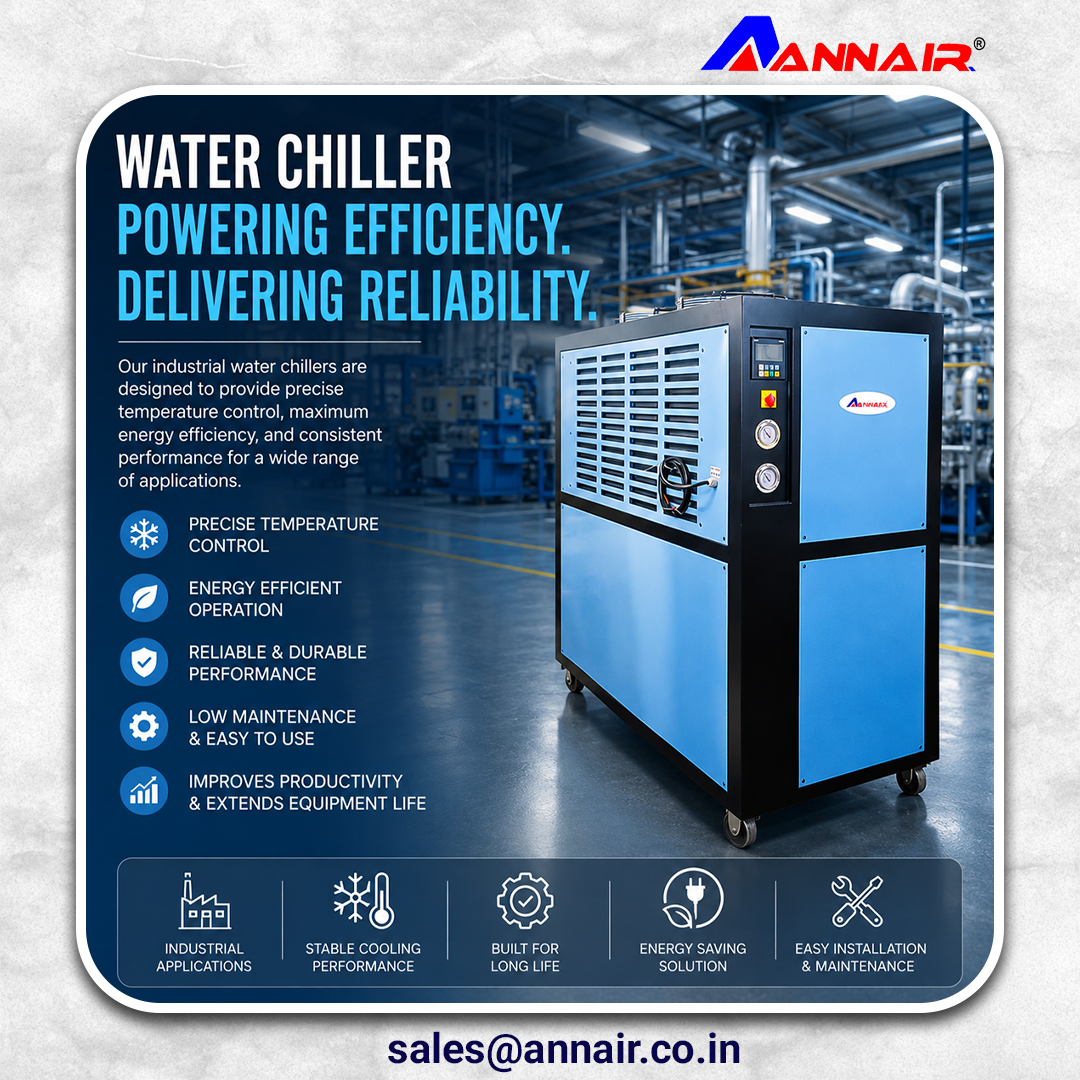
A water chiller is a cooling system designed to remove heat from industrial processes or equipment by circulating chilled water through a closed-loop system. Heat generated during manufacturing or production is absorbed by the circulating water and transferred to the refrigeration system, where it is safely dissipated.
Industrial water chillers are widely used because many production processes require stable temperatures to maintain product quality. Plastic injection molding machines, laser cutting systems, CNC machines, breweries, pharmaceutical laboratories, chemical processing plants, and printing industries all depend on efficient cooling systems. Without adequate temperature control, machinery may overheat, production quality can decline, and operating costs often increase dramatically.
Businesses also appreciate water chillers because they improve workplace safety by preventing overheating and reducing thermal stress on sensitive equipment. Rather than relying on inconsistent cooling methods, a professionally designed chiller delivers continuous and reliable temperature control throughout the production cycle.
How Does a Water Chiller Work?
A water chiller operates using the refrigeration cycle. The system circulates refrigerant through four major components: the compressor, condenser, expansion valve, and evaporator. As the refrigerant absorbs heat from the circulating process water inside the evaporator, it cools the water before sending it back to the production equipment.
The heated refrigerant is compressed, raising its pressure and temperature before entering the condenser. Depending on the chiller design, either ambient air or cooling water removes this heat. After condensation, the refrigerant expands through the expansion valve, reducing its pressure and temperature before returning to the evaporator to repeat the process.
This continuous cycle ensures stable cooling performance even during demanding industrial operations. Advanced chillers often include intelligent controllers, digital monitoring systems, and automatic safety protections that optimize performance while minimizing energy consumption.
Why Choosing the Right Water Chiller Matters
Impact on Production Efficiency
Selecting the correct water chiller directly affects production efficiency. Equipment operating at optimal temperatures experiences less wear, produces higher-quality products, and operates more consistently. Temperature fluctuations can cause defects in plastic molding, inaccurate laser cutting, inconsistent pharmaceutical production, or reduced food quality.
A properly matched chiller prevents production interruptions caused by overheating. Employees spend less time dealing with emergency maintenance, allowing operations to continue smoothly. Businesses also benefit from improved customer satisfaction because product quality remains consistent throughout the manufacturing process.
Reliable cooling contributes to predictable production schedules, helping companies meet delivery deadlines while maintaining high operational standards. In competitive industries, this reliability often becomes a significant business advantage.
Long-Term Cost Savings
Although high-quality chillers may require a larger initial investment, they frequently deliver substantial savings throughout their service life. Energy-efficient compressors, intelligent temperature controls, and premium heat exchangers reduce electricity consumption while maintaining consistent cooling performance.
Lower energy bills represent only one aspect of the financial benefits. Proper cooling reduces equipment failures, minimizes repair expenses, and extends machinery lifespan. Companies also experience fewer production stoppages, reducing the hidden costs associated with downtime.
Businesses that focus solely on purchase price may ultimately spend far more on electricity, maintenance, and equipment replacement than companies that prioritize efficiency and reliability.
Types of Water Chillers
Air-Cooled Water Chillers
Air-cooled water chillers remove heat using ambient air through condenser fans. These systems are popular because they require relatively simple installation and do not need external cooling towers.
They are ideal for facilities with limited water availability or businesses seeking lower installation complexity. Air-cooled models generally require less maintenance and occupy less infrastructure compared to water-cooled alternatives.
Their performance may decrease during extremely hot weather because they depend on surrounding air temperature for heat rejection. Despite this limitation, many small and medium-sized manufacturing facilities successfully use air-cooled chillers for years with excellent reliability.
Water-Cooled Water Chillers
Water-cooled chillers transfer heat through condenser water connected to cooling towers. These systems usually offer higher efficiency, particularly in large industrial applications operating continuously.
Large manufacturing plants, chemical processing facilities, hospitals, and commercial buildings often select water-cooled systems because of their superior energy performance under heavy loads. Although installation costs are typically higher, operational savings can offset the additional investment over time.
These chillers require regular maintenance of cooling towers, pumps, and water treatment systems to prevent scaling and corrosion. When properly maintained, they provide exceptional cooling performance and long operational life.
Key Factors to Consider Before Buying
Cooling Capacity
Cooling capacity is arguably the most critical consideration when selecting a water chiller. An undersized unit struggles to maintain target temperatures, leading to reduced productivity and excessive compressor wear. An oversized system increases purchase costs, wastes electricity, and may cycle inefficiently.
Manufacturers typically express cooling capacity in tons of refrigeration (TR), kilowatts (kW), or BTU/hr. Determining the correct size requires evaluating process heat load, operating temperatures, production cycles, and future expansion requirements.
Professional heat load calculations performed by experienced engineers help ensure the selected chiller meets both current and anticipated production demands.
Energy Efficiency
Electricity costs represent a substantial portion of a chiller's lifetime operating expenses. Choosing an energy-efficient system can significantly reduce monthly utility bills while lowering environmental impact.
Look for features such as:
- High-efficiency compressors
- Variable speed drives
- Microprocessor controls
- Smart temperature management
- Premium heat exchangers
- Eco-friendly refrigerants
Although efficient systems often cost more initially, they typically provide excellent returns through reduced operating expenses.
Installation Space
Available installation space influences chiller selection. Air-cooled chillers require adequate airflow around condenser coils, while water-cooled systems need additional space for cooling towers, pumps, and piping.
Planning installation carefully helps simplify maintenance access, improves airflow, and ensures long-term operational reliability. Future expansion should also be considered when designing equipment layouts.
Ambient Conditions
Environmental conditions directly affect chiller performance. Facilities located in extremely hot climates may require larger condenser capacity or specialized system designs to maintain cooling efficiency.
Dust, humidity, corrosive environments, and outdoor installation requirements should all be evaluated during equipment selection. Protective coatings and weather-resistant enclosures may be beneficial in challenging operating environments.
Maintenance Requirements
Routine maintenance preserves cooling performance and extends equipment lifespan. Businesses should evaluate maintenance accessibility before purchasing a system.
Important maintenance activities include:
- Cleaning condenser coils
- Checking refrigerant levels
- Inspecting pumps
- Monitoring water quality
- Replacing filters
- Calibrating sensors
Choosing equipment with accessible service points reduces maintenance time and minimizes production interruptions.
Industries That Use Water Chillers
Manufacturing and Plastic Processing
Manufacturing industries rely extensively on industrial water chillers for maintaining stable temperatures during production. Plastic injection molding, blow molding, extrusion, die casting, and metal fabrication all require consistent cooling to ensure dimensional accuracy and product quality.
Efficient cooling shortens production cycles, reduces reject rates, and extends mold life. Companies that maintain stable process temperatures often achieve higher throughput while reducing operating costs.
Food, Beverage, and Pharmaceutical Industries
Food processing facilities use chillers to preserve freshness, control fermentation, cool beverages, and maintain sanitary production environments. Pharmaceutical manufacturers require highly accurate temperature control to protect sensitive formulations and comply with strict regulatory standards.
Reliable cooling helps maintain product integrity, improve consistency, and support quality assurance programs. These industries often require specialized chillers capable of maintaining precise temperatures with minimal fluctuations.
Conclusion
Selecting the right water chiller for your business is a strategic investment that affects productivity, equipment reliability, operating costs, and long-term profitability. Rather than focusing only on purchase price, businesses should evaluate cooling capacity, energy efficiency, installation requirements, maintenance needs, environmental conditions, and future growth plans.
Whether you choose an air-cooled water chiller or a water-cooled water chiller, partnering with an experienced manufacturer or supplier ensures the system is correctly sized and configured for your application. A high-quality industrial chiller delivers dependable performance, lower operating costs, and years of reliable service, making it an essential component of modern industrial operations.
Contact Information
Annair Drychill Tech (India) Pvt. Ltd.
📞 Phone: +91 9076127777
📱 WhatsApp: +91 9076127777
📧 Email: sales@annair.co.in
🌐 Website: www.annair.com