
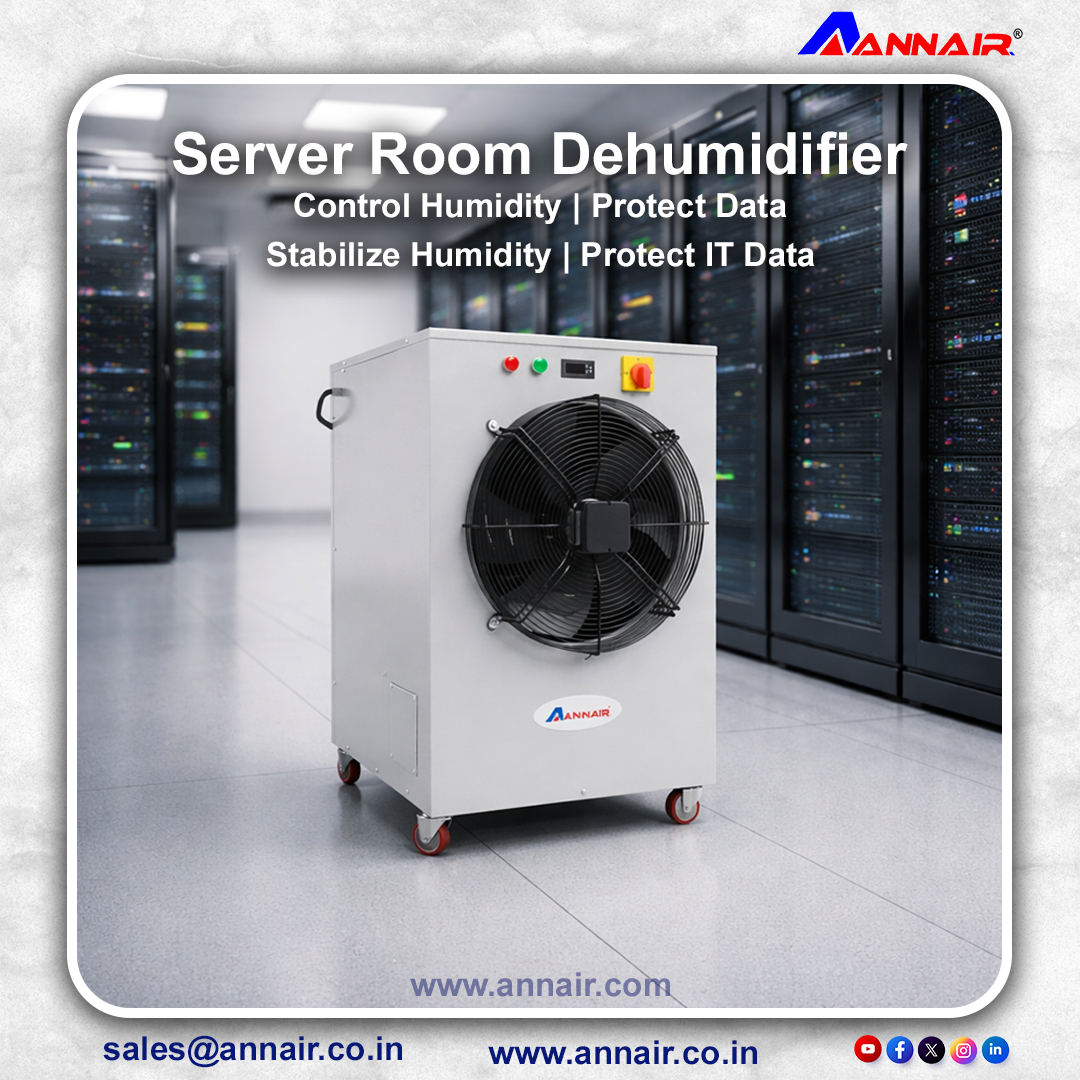
Server Room Dehumidifier: Protect Your IT Infrastructure from Moisture Damage
Introduction
In today’s digital world, server rooms and data centers are the backbone of every business. From storing critical data to running applications and networks, servers operate continuously and require a controlled environment for optimal performance. While temperature control is often prioritized, humidity control is equally important but frequently overlooked.
Excess moisture in the air can lead to serious damage, including corrosion, short circuits, and system failures. This is where a server room dehumidifier becomes essential. It helps maintain the ideal humidity level, ensuring the safety and longevity of your IT infrastructure.
Why Humidity Control is Important in Server Rooms
Humidity plays a crucial role in maintaining the health of electronic equipment. Both high and low humidity levels can create problems:
1. High Humidity Risks
High humidity in server rooms can severely impact the performance and safety of critical IT equipment. When moisture levels rise, condensation can form on sensitive electronic components, which may lead to malfunctioning or permanent damage. Over time, excessive humidity also causes corrosion of metal parts such as connectors, circuit boards, and wiring, reducing their efficiency and reliability. Additionally, the presence of moisture increases the chances of short circuits, which can result in sudden equipment failure. All these factors significantly increase the risk of unexpected downtime, affecting business operations and potentially leading to data loss and financial losses.
2. Low Humidity Risks
Low humidity in server rooms can be just as harmful as high humidity. When the air becomes too dry, it leads to the buildup of static electricity. This static charge can discharge suddenly in the form of electrostatic discharge (ESD), which is extremely dangerous for sensitive electronic components. Even a small ESD event can damage microchips, circuit boards, and other critical parts of servers. Over time, repeated exposure to low humidity conditions can reduce equipment reliability, increase maintenance costs, and lead to unexpected system failures.
Maintaining balanced humidity is critical to avoid these risks and ensure uninterrupted operations.
Ideal Humidity Level for Server Rooms
The recommended relative humidity level for server rooms typically ranges between 40% and 60% RH.
Below 40% → Risk of static electricity
Above 60% → Risk of condensation and corrosion
A dehumidifier for server rooms helps maintain this optimal range, protecting sensitive IT equipment.
What is a Server Room Dehumidifier?
A server room dehumidifier is a specialized system designed to remove excess moisture from the air in controlled environments like server rooms and data centers.
It works by:
Drawing in humid air
Removing moisture through condensation or desiccant technology
Releasing dry air back into the room
These systems are designed for continuous operation and high efficiency.
Key Benefits of Using a Dehumidifier in Server Rooms
1. Protects IT Equipment
A server room dehumidifier plays a critical role in protecting valuable IT equipment from moisture-related damage. By maintaining optimal humidity levels, it prevents corrosion on metal components, avoids condensation on circuit boards, and ensures that servers, switches, and storage devices function reliably over time.
2. Prevents Downtime
Uncontrolled humidity can lead to sudden system failures and operational disruptions. A dehumidifier helps maintain a stable environment, significantly reducing the chances of unexpected downtime and ensuring continuous business operations.
3. Improves Equipment Lifespan
Maintaining the right humidity level ensures that IT equipment operates under ideal conditions. This reduces wear and tear caused by moisture or dryness, ultimately extending the lifespan of expensive servers and networking devices.
4. Enhances Performance
Stable humidity levels contribute to consistent performance of servers and networking systems. When environmental conditions are controlled, equipment can operate efficiently without the risk of interruptions caused by moisture-related issues.
5. Reduces Maintenance Costs
By preventing corrosion, short circuits, and static-related damage, a dehumidifier reduces the need for frequent repairs and replacements. This helps businesses save significantly on maintenance and operational costs over time.
Common Problems Without a Dehumidifier
If humidity is not properly controlled in a server room, several critical issues can arise. Excess moisture can lead to frequent hardware failures, as sensitive components are highly vulnerable to environmental changes. There is also an increased risk of data loss due to system crashes or damage to storage devices. Over time, rust and corrosion may develop on connectors and internal parts, reducing system efficiency. Condensation can form on cooling systems, affecting their performance and increasing the load on air conditioning units. Additionally, uncontrolled humidity can lead to higher energy consumption, as cooling systems must work harder to maintain stable conditions.
Installing a server room humidity control system can eliminate these issues.
Types of Dehumidifiers for Server Rooms
1. Refrigerant Dehumidifiers
Refrigerant dehumidifiers are commonly used in server rooms where temperature conditions are moderate. These systems work by cooling the air to remove excess moisture and are known for their cost-effectiveness. They are suitable for small to medium-sized server rooms where standard humidity control is required.
2. Desiccant Dehumidifiers
Desiccant dehumidifiers are designed for environments that require precise humidity control, especially at lower temperatures. These systems use moisture-absorbing materials to remove humidity from the air and are ideal for critical applications such as data centers and high-performance server rooms where even slight variations can cause issues.
How to Choose the Right Server Room Dehumidifier
When selecting a dehumidifier, consider the following factors:
Room size and volume
Heat load from equipment
Required humidity level
Airflow and ventilation
Continuous operation capability
Choosing the right system ensures maximum efficiency and protection.
Applications of Server Room Dehumidifiers
Server room dehumidifiers are widely used across various industries and critical environments. They are essential in IT server rooms and data centers where continuous operation is required. Telecom facilities rely on them to maintain stable conditions for communication equipment. Control rooms use dehumidifiers to ensure accurate functioning of monitoring systems, while network operation centers (NOCs) depend on them to prevent disruptions and maintain system reliability.
Why Choose Annair Dehumidifiers?
At Annair, we provide advanced industrial dehumidifiers designed specifically for critical environments like server rooms and data centers.
Our Key Features:
High-efficiency moisture removal
Durable and reliable design
Energy-efficient operation
Customized solutions
Easy installation and maintenance
Conclusion
Humidity control is not optional—it is a necessity for maintaining the reliability and efficiency of your server room. A server room dehumidifier ensures optimal humidity levels, protects valuable IT infrastructure, and prevents costly downtime.
Investing in the right dehumidifier system today can save significant operational costs and protect your business in the long run.
Get in Touch
Looking for the best dehumidifier for your server room?
Contact us today for expert consultation and customized solutions tailored to your requirements.
Annair – Your Trusted Partner in Humidity Control Solutions
📞 +91 9076127777