
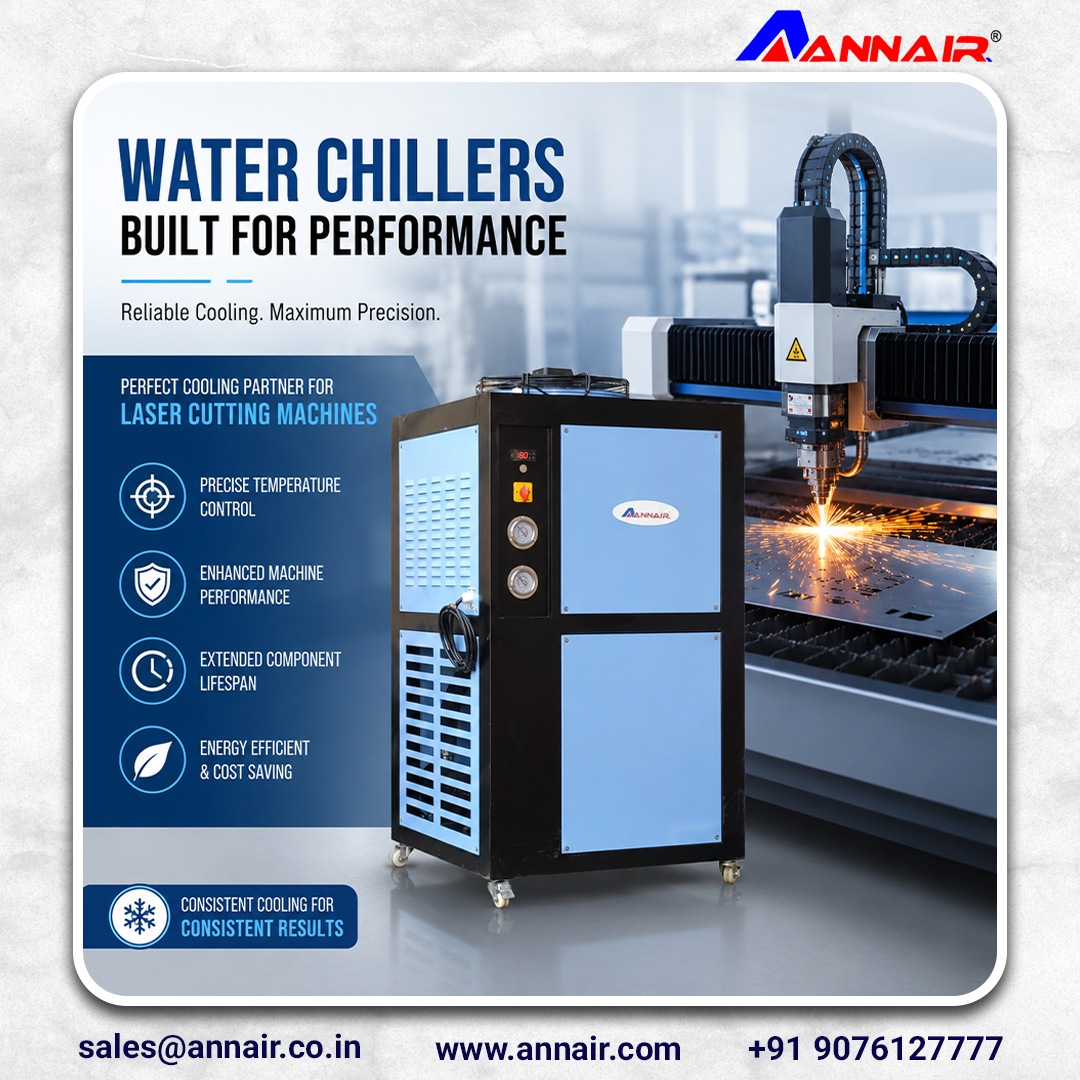
Why Laser Cutting Machines Require Efficient Chiller Systems
Laser cutting technology has transformed modern manufacturing by delivering exceptional precision, speed, and efficiency across industries such as automotive, aerospace, metal fabrication, electronics, and signage. Whether you're cutting stainless steel, aluminum, brass, or carbon steel, laser machines generate an enormous amount of heat during operation. If this heat is not effectively controlled, the machine's performance can decline rapidly, leading to poor cutting quality, increased downtime, and expensive repairs. This is where an efficient industrial chiller system becomes a critical component of the laser cutting process.
Understanding the Role of Laser Cutting Machines
Laser cutting machines use a highly concentrated laser beam to melt, burn, or vaporize materials with incredible accuracy. Fiber laser cutting machines, in particular, operate at high power levels and produce substantial heat within the laser source, optics, and electronic components. While the laser beam performs the cutting task, the machine itself requires continuous cooling to maintain stable operating conditions.
Without proper cooling, internal temperatures can rise beyond recommended limits, affecting beam quality, cutting precision, and overall equipment reliability.
Why Temperature Control Is Essential
Heat Generation During Laser Cutting
Every laser cutting operation produces heat—not only at the cutting surface but also inside the laser resonator, power supply, optical components, and control electronics. High-power fiber lasers operating continuously can experience significant thermal loads. Even a small increase in operating temperature can reduce laser efficiency and impact production quality.
Maintaining a consistent cooling temperature helps ensure that all sensitive components function within their optimal operating range.
Impact of Overheating on Laser Performance
Overheating can create several operational challenges, including:
- Reduced laser beam stability
- Lower cutting accuracy
- Increased machine downtime
- Premature component wear
- Frequent maintenance requirements
- Higher operating costs
A reliable laser chiller system minimizes these risks by continuously removing excess heat and maintaining stable temperatures.
What Is an Industrial Chiller System?
An industrial water chiller is a cooling system designed to remove heat from laser machines by circulating temperature-controlled coolant through critical components. The absorbed heat is then released through the refrigeration cycle before the coolant is recirculated.
How a Chiller Works
A laser chiller typically consists of:
- Compressor
- Evaporator
- Condenser
- Expansion valve
- Coolant circulation pump
- Digital temperature controller
The system continuously monitors coolant temperature and adjusts cooling performance to maintain a stable operating environment, ensuring uninterrupted production.
Benefits of Using an Efficient Chiller System
Improved Cutting Accuracy
Stable cooling helps maintain consistent laser output power, resulting in cleaner cuts, smoother edges, and tighter dimensional tolerances. Temperature fluctuations can alter beam characteristics, leading to inconsistent cutting quality.
Extended Laser Source Life
Laser sources are among the most expensive components of a laser cutting machine. Proper cooling reduces thermal stress on these components, significantly extending their operational lifespan and protecting your investment.
Reduced Maintenance Costs
Efficient cooling minimizes overheating-related failures, reducing unplanned maintenance and costly repairs. Operators also spend less time troubleshooting temperature-related issues, improving overall productivity.
Higher Productivity
Manufacturing environments demand continuous operation with minimal downtime. An efficient industrial chiller allows laser machines to run consistently, even during extended production shifts, ensuring maximum throughput and reliable performance.
Choosing the Right Chiller for Your Laser Cutting Machine
Selecting the correct chiller depends on several important factors.
Cooling Capacity
The cooling capacity should match the laser machine's heat load. An undersized chiller cannot remove sufficient heat, while an oversized unit may consume unnecessary energy.
Temperature Stability
Look for chillers capable of maintaining precise temperature control, typically within ±0.5°C to ±1°C, depending on the laser manufacturer's specifications. Stable temperatures improve laser efficiency and cutting consistency.
Energy Efficiency
Modern industrial chillers feature high-efficiency compressors, intelligent controllers, and energy-saving technologies that reduce electricity consumption while delivering reliable cooling performance.
Conclusion
An efficient industrial chiller system is not simply an accessory for a laser cutting machine—it is an essential component that directly influences performance, precision, reliability, and operating costs. By maintaining stable temperatures, protecting valuable laser components, and ensuring uninterrupted production, a high-quality chiller helps manufacturers achieve superior cutting results while extending equipment life. Investing in the right cooling solution ultimately leads to higher productivity, lower maintenance expenses, and a stronger return on investment.
Contact Information
Annair Drychill Tech (India) Pvt. Ltd.
📞 Phone: +91 9076127777
📱 WhatsApp: +91 9076127777
📧 Email: sales@annair.co.in
🌐 Website: https://www.annair.co.in