Refrigerated Air Dryer for Pharmaceutical Industries: Why Compressed Air Quality Cannot Be an Afterthought
A practical guide for pharma manufacturers on choosing, running, and maintaining refrigerated air dryers that meet GMP-grade compressed air requirements.
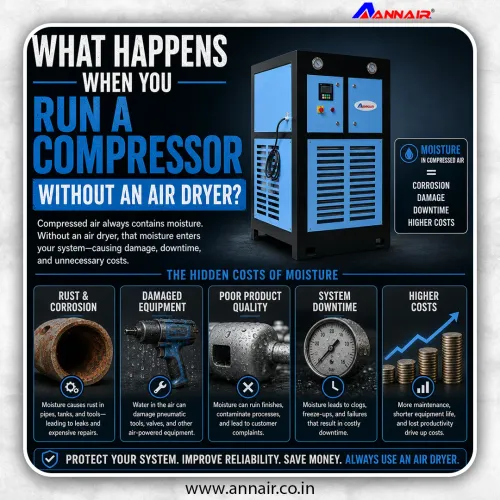
Compressed air touches more of a pharmaceutical plant than most people realize. It drives pneumatic valves on tablet presses, actuates cylinders on blister packing lines, and in some setups comes into direct or indirect contact with the product itself. If that air is carrying moisture, the consequences show up as corroded pneumatics, contaminated batches, and failed audits. A refrigerated air dryer is the equipment that stands between your compressor and that outcome.
What a Refrigerated Air Dryer Actually Does
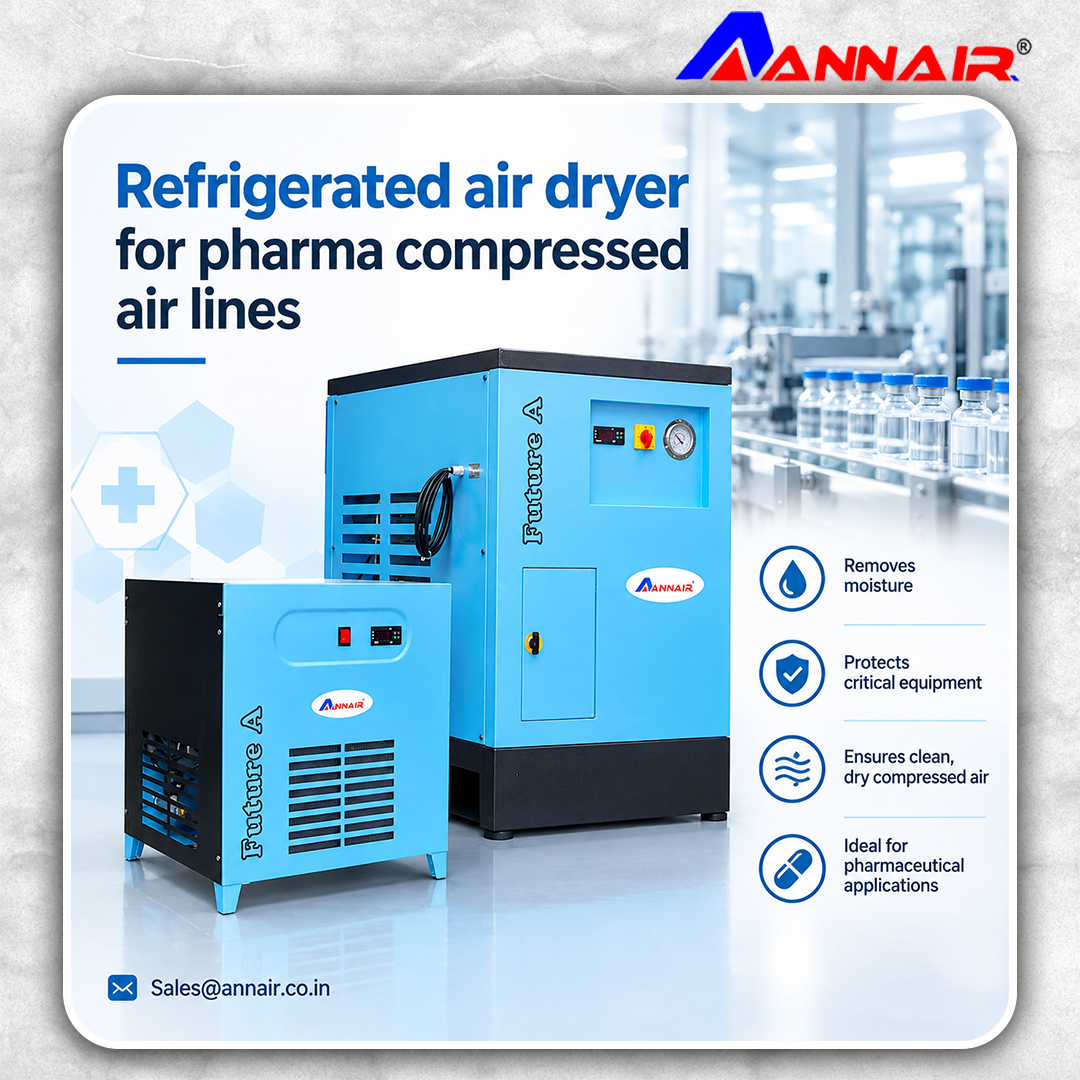
A refrigerated air dryer cools compressed air down to a controlled dew point, usually around 3°C to 5°C, so that the water vapor in the air condenses out and gets drained away before the air ever reaches your production lines. The air is then reheated slightly so it doesn't sweat inside the pipework. The result is compressed air with a stable, predictable moisture content, batch after batch, shift after shift.
For general industrial use, that's often enough. For pharmaceutical manufacturing, it's the starting point of a much stricter conversation, because the same air that runs your pneumatics may also be classified as a critical utility under GMP.
Why Pharmaceutical Plants Have Different Air Quality Requirements
Regulatory bodies treat compressed air used in pharma production as a utility that can directly affect product quality. That means moisture, oil carryover, and particulate content aren't just maintenance concerns, they're compliance concerns tied to ISO 8573-1 air purity classes and to GMP documentation requirements from bodies like the WHO, USFDA, and India's CDSCO.
Moisture in particular creates two separate risks in a pharma setting. First is the mechanical risk: water in the lines corrodes valves, cylinders, and fittings, leading to unplanned downtime on lines that are validated to run a certain way. Second is the product risk: moisture-laden air reaching tablet coating, capsule filling, or blister packaging stations can introduce contamination that triggers batch rejection.
Takeaway: In pharma manufacturing, a refrigerated air dryer isn't an accessory to the compressor, it's part of the quality system. Dew point control has a direct line to batch integrity and audit readiness.
Where Refrigerated Air Dryers Are Used in Pharma Manufacturing
- Pneumatic actuation for tablet presses, capsule fillers, and blister packing machines
- Air knives and blow-off systems used to clean vials, bottles, and containers before filling
- Instrument air supply for control valves and process instrumentation across the plant
- Powder handling and pneumatic conveying systems where moisture can cause caking or clumping
- Cleanroom air systems and HVAC support where dry air reduces the load on downstream filtration
- Packaging lines, including cartoning and sealing equipment that relies on consistent air pressure
Benefits of Installing the Right Refrigerated Air Dryer
Consistent Product Quality
A stable dew point means your process parameters stay within validated limits instead of drifting with the weather or the season. That consistency is exactly what auditors and QA teams look for.
Lower Maintenance and Downtime Costs
Dry air means less internal corrosion in pneumatic cylinders, solenoid valves, and piping. Plants that switch from an undersized or aging dryer to a correctly sized refrigerated unit typically see fewer unplanned valve replacements within the first year.
Energy Efficiency Compared to Alternatives
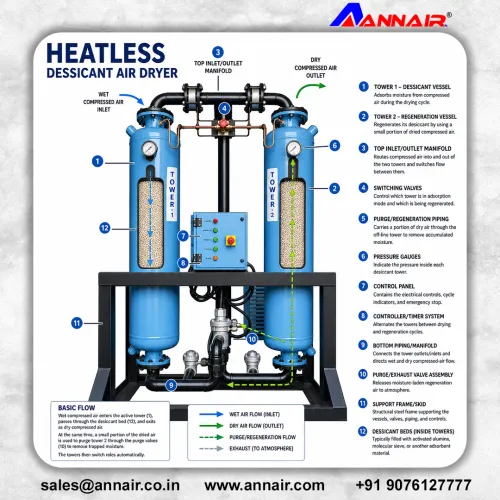
Refrigerated dryers generally cost less to run than desiccant dryers for applications that don't need sub-zero dew points, since they don't consume purge air or regeneration heat. For most pharma utility air applications, a properly specified refrigerated dryer hits the required dew point without the higher operating cost of a heatless desiccant system.
Easier Compliance Documentation
Modern refrigerated air dryers can be fitted with dew point monitors and data logging, giving your QA team a continuous record to present during regulatory inspections instead of scrambling for spot-check data.
Protection for Downstream Equipment
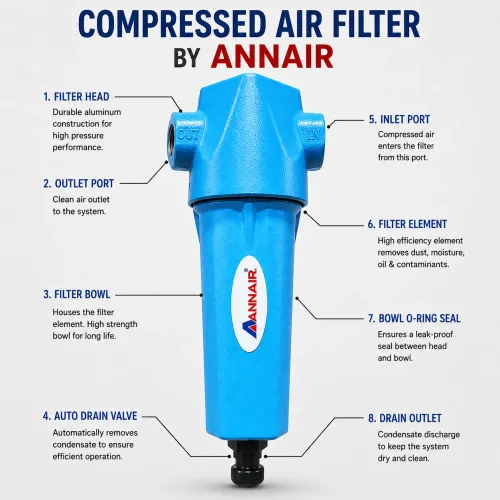
Filters, valves, actuators, and instrumentation all last longer when they're not fighting condensation. That protects the capital already invested in your production line.
Choosing the Right Refrigerated Air Dryer for a Pharma Application
Sizing and selection depend on more than just compressor capacity. A few factors matter more in pharma settings than in general industrial use:
| Factor | Why It Matters in Pharma |
|---|---|
| Dew point stability | Validated processes need repeatable air quality, not just an average dew point |
| ISO 8573-1 class rating | Determines whether the air meets the purity class specified for your process |
| Corrosion-resistant materials | Pharma environments often run cleaning-in-place cycles that expose nearby equipment to moisture and chemicals |
| Monitoring and alarms | Needed for continuous compliance records and early warning of dryer underperformance |
| Load variability handling | Batch manufacturing creates uneven air demand, and the dryer needs to hold dew point through those swings |
An undersized dryer will let dew point creep up under peak load, right when your line is running and least able to tolerate a moisture excursion. Oversizing wastes energy and capital. Getting this right usually means sitting down with your compressed air demand profile before picking a model off a datasheet.
Get the Right Dryer Sized for Your Plant
Annair Drychill Tech's engineering team reviews your compressed air demand and recommends a refrigerated air dryer sized for pharma-grade reliability, not guesswork.
Talk to Our Engineers on WhatsAppFrequently Asked Questions
What dew point is required for pharmaceutical compressed air?
Most pharmaceutical applications call for a pressure dew point in the range specified by ISO 8573-1, commonly Class 4 or better, which a properly sized refrigerated air dryer can achieve for the majority of production utility air needs. Direct product-contact applications may require a lower dew point, which is where desiccant drying is sometimes added downstream.
Is a refrigerated air dryer enough for pharma, or do I need a desiccant dryer too?
It depends on the application. For general plant utility air, pneumatics, and instrument air, a refrigerated dryer usually meets requirements. For applications needing sub-zero dew points, such as certain direct product-contact air uses, a desiccant dryer downstream of the refrigerated unit is the standard approach, since the refrigerated dryer reduces the moisture load the desiccant system has to handle.
How often should a refrigerated air dryer be serviced in a pharma facility?
A quarterly preventive maintenance schedule is typical, covering filter checks, drain function, refrigerant pressure, and dew point verification. Facilities running validated processes often log this more frequently as part of their utility qualification protocol.
Can a refrigerated air dryer help pass a GMP audit?
Yes, indirectly. The dryer itself isn't what an auditor certifies, but consistent dew point performance, backed by monitoring data, gives your QA team the documentation to demonstrate that compressed air utility has stayed within specification. That documentation is often exactly what auditors ask to see.
What size refrigerated air dryer does a pharma plant need?
Sizing depends on your compressor's free air delivery, ambient temperature, inlet air temperature, and peak demand during batch operations. Rather than sizing off compressor capacity alone, it's worth mapping actual demand across your busiest shift, since batch manufacturing often creates demand spikes a flat calculation misses.
Does Annair Drychill Tech supply refrigerated air dryers for pharmaceutical use?
Yes. Annair Drychill Tech India Pvt. Ltd. manufactures refrigerated air dryers used across pharmaceutical, OEM, and industrial applications in India and the UAE, with sizing support based on your compressed air demand profile.