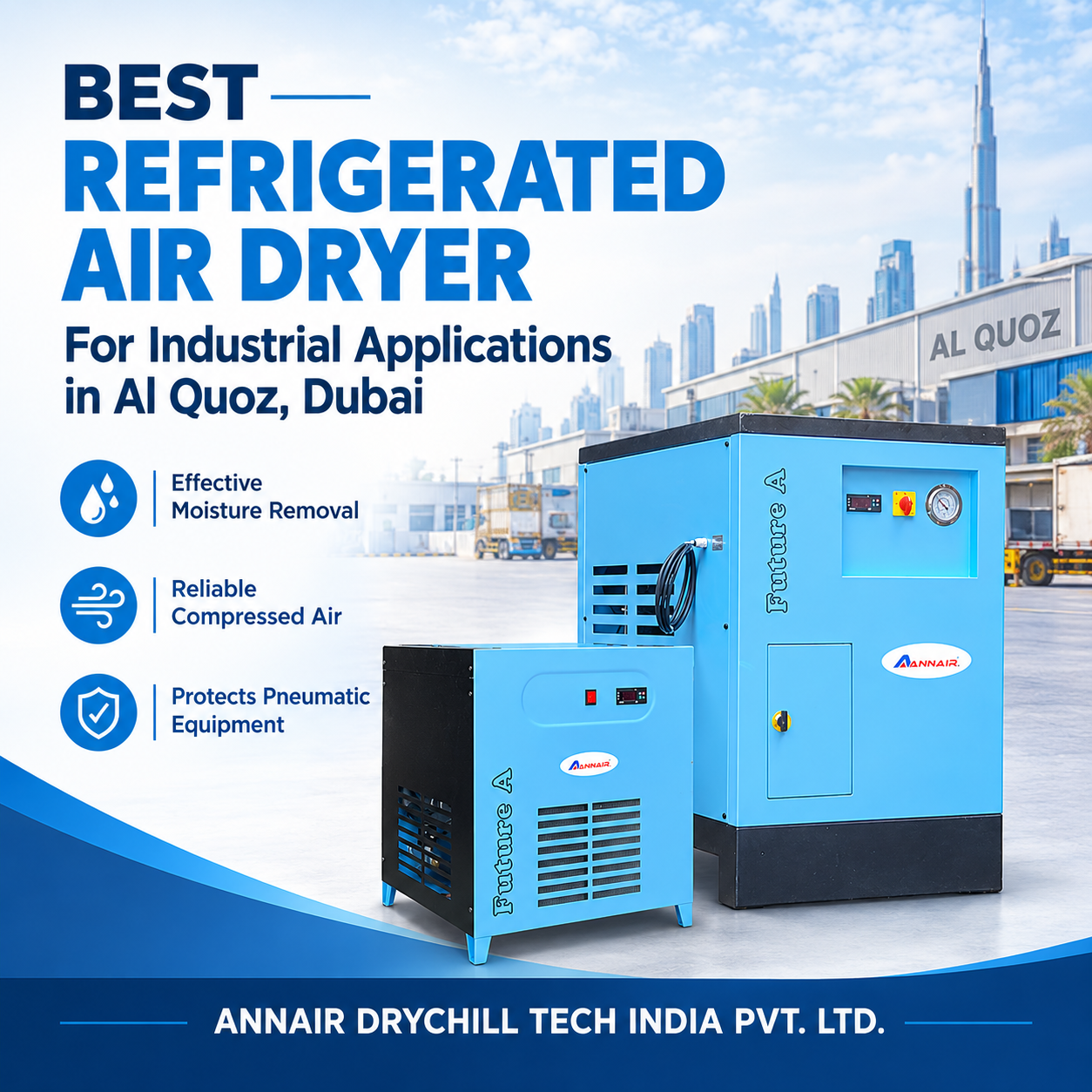
Best Refrigerated Air Dryer for Industrial Applications in Al Quoz, Dubai
Industries need clean and dry compressed air to keep their machines running smoothly. Moisture in compressed air can damage pneumatic tools, affect product quality, cause pipe corrosion, and increase maintenance costs. For manufacturing companies and industrial facilities in Al Quoz, Dubai, choosing the right air treatment system is important for reliable production.
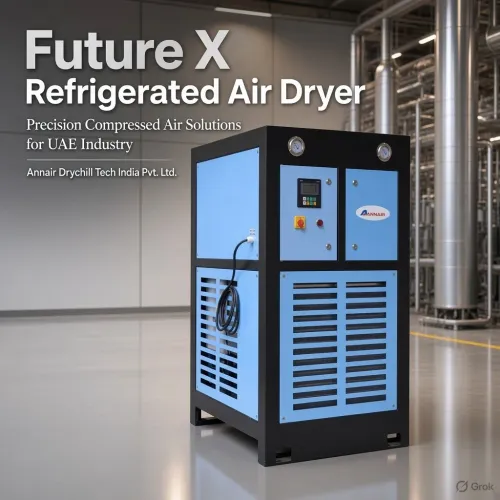
A best refrigerated air dryer for industrial applications in Al Quoz, Dubai can help remove moisture from compressed air before it reaches industrial equipment. Annair Drychill Tech India Pvt. Ltd. provides compressed air treatment solutions designed to support different industrial requirements.
In this guide, we explain how refrigerated air dryers work, their main uses and benefits, and how to choose a suitable model for your industrial application.
What Is a Refrigerated Air Dryer?
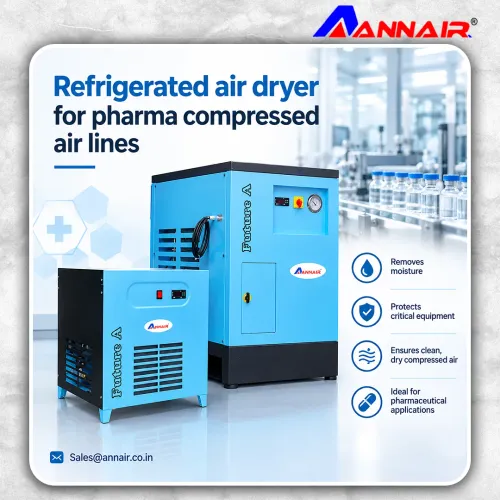
A refrigerated air dryer is a machine that removes water vapour from compressed air by cooling the air. As the compressed air cools, moisture condenses into liquid water. The collected water is then removed through a drainage system, and the dried air moves to the next stage of the compressed air system.
This process helps reduce moisture entering air-operated machines, pneumatic tools, and production equipment.
Refrigerated air dryers are commonly used in manufacturing plants, workshops, automotive facilities, packaging units, and other industries that need a dependable supply of dry compressed air.
Why Do Industries in Al Quoz, Dubai Need Refrigerated Air Dryers?
Al Quoz is an important industrial and commercial area in Dubai, with workshops, manufacturing facilities, automotive businesses, and other industrial operations.
Dubai's hot weather makes proper compressed air treatment an important consideration. When warm, moisture-containing air is compressed and later cools, water can condense inside the compressed air system.
Without suitable moisture removal, this water can cause several problems.
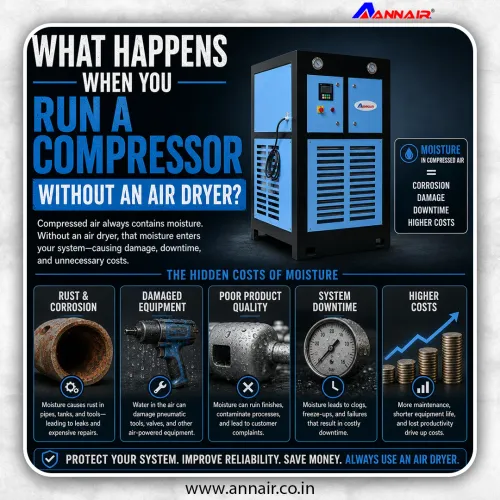
Common problems caused by moisture include:
Rust and corrosion inside compressed air pipes.
Damage to pneumatic tools and air-operated equipment.
Poor performance of some production processes.
Water contamination in compressed air lines.
Increased maintenance and equipment downtime.
Reduced reliability of compressed air systems.
A suitable refrigerated air dryer helps control this moisture and supports more reliable industrial operations.
Uses of Refrigerated Air Dryers in Industrial Applications
1. Manufacturing Industries
Manufacturing plants use compressed air for pneumatic cylinders, automated machinery, material handling, and various production operations.
A refrigerated air dryer helps reduce moisture entering these systems, supporting consistent equipment performance and reducing moisture-related maintenance.
2. Automotive Workshops
Automotive workshops use compressed air for pneumatic tools, tyre servicing equipment, spray applications, and cleaning operations.
A refrigerated air dryer helps remove excess moisture from compressed air. For paint spraying, however, additional filtration and air treatment may be necessary to achieve the required air quality.
3. CNC Machining and Metal Fabrication
CNC machining and metal fabrication facilities often use compressed air for machine operations, pneumatic controls, and cleaning applications.
Moisture can affect equipment reliability and may contribute to corrosion. A suitable refrigerated air dryer helps maintain a drier compressed air supply for these applications.
4. Plastic Manufacturing and Packaging
Plastic manufacturing and packaging facilities use compressed air for automation, pneumatic controls, and material handling.
Dry compressed air helps protect pneumatic components and supports reliable operation. The exact air quality required depends on the machinery and production process.
5. Engineering Workshops
Engineering workshops use compressed air for pneumatic tools, assembly equipment, and general industrial applications.
A refrigerated air dryer can help control water accumulation in compressed air lines and reduce moisture-related operational problems.
Key Benefits of a Refrigerated Air Dryer
1. Effective Moisture Removal
A refrigerated air dryer cools compressed air to condense water vapour, allowing liquid moisture to be separated and drained.
This helps reduce the amount of water reaching downstream equipment.
2. Protection for Industrial Equipment
Excess moisture can contribute to corrosion and equipment problems. Removing condensate helps protect air lines, pneumatic components, and connected machinery.
3. Reduced Maintenance Requirements
Moisture-related problems can lead to frequent inspections, repairs, and equipment servicing.
A correctly selected air dryer, supported by regular maintenance, can help reduce these problems.
4. Improved Production Reliability
Water accumulation in compressed air systems can interrupt industrial operations.
A suitable refrigerated air dryer helps maintain more consistent compressed air conditions and supports reliable production.
5. Suitable for Many General Industrial Applications
Refrigerated air dryers are commonly used where a moderate level of compressed air dryness is sufficient.
They are suitable for many manufacturing, engineering, automotive, and packaging applications. Processes that require very low moisture levels may need a desiccant air dryer instead.
6. Support for Compressed Air System Efficiency
Choosing the correct dryer capacity and maintaining proper operating conditions can help avoid unnecessary energy use and pressure losses.
The dryer should be selected according to actual airflow, operating pressure, inlet temperature, ambient conditions, and required air quality.
How to Choose the Best Refrigerated Air Dryer in Al Quoz, Dubai
Selecting the right refrigerated air dryer is important for achieving the required air quality and dependable performance.
Consider these factors before choosing a model.
1. Compressed Air Flow Rate
Check the compressed air demand of your plant and select a dryer that can handle the required flow rate.
Airflow is often expressed in CFM (cubic feet per minute). Consider both average demand and peak demand when sizing the system.
2. Operating Pressure
Confirm the operating pressure of your compressed air system. The dryer must be suitable for the pressure at which it will operate.
3. Inlet Air Temperature
The temperature of the compressed air entering the dryer affects its performance. Check the expected inlet temperature when selecting the model.
4. Ambient Temperature
Dubai's hot climate can affect the performance of air-cooled equipment. Review the manufacturer's rated operating conditions and confirm that the selected dryer can work under the expected ambient temperature.
5. Required Pressure Dew Point
The pressure dew point indicates how dry the compressed air is under pressure.
For many general industrial applications, refrigerated air dryers provide an adequate pressure dew point. Applications requiring much drier air may need a desiccant dryer.
6. Air Filters and Drainage
Suitable upstream and downstream filters may be needed to control oil aerosols and solid particles, depending on the application.
A reliable condensate drainage system is also important to remove collected water and prevent it from entering the compressed air line again.
7. Maintenance and Service Requirements
Check the maintenance schedule, availability of spare parts, condensate drain requirements, and service support before making a purchase.
A properly maintained dryer is more likely to deliver consistent performance over its working life.
Why Consider Annair Refrigerated Air Dryers?
Annair Drychill Tech India Pvt. Ltd. offers compressed air treatment products for industrial applications, including refrigerated air dryers and associated filtration solutions.
When evaluating an Annair solution for an industrial facility in Al Quoz, Dubai, buyers should consider their compressed air capacity, operating pressure, ambient temperature, and required pressure dew point.
The appropriate model should be selected according to the actual operating conditions of the plant.
Before selecting an air dryer, confirm the following details:
Required airflow in CFM.
Compressor operating pressure.
Compressed air inlet temperature.
Expected ambient temperature.
Required pressure dew point.
Filtration and condensate drainage requirements.
These details help identify a suitable air dryer for the intended industrial application.
Refrigerated Air Dryer vs Desiccant Air Dryer
Both refrigerated and desiccant air dryers remove moisture from compressed air, but they serve different requirements.
A refrigerated air dryer cools compressed air to condense moisture. It is commonly used in general industrial applications where a moderate pressure dew point is acceptable.
A desiccant air dryer uses moisture-absorbing material to achieve much lower pressure dew points. It is often preferred for applications requiring very dry compressed air.
For general manufacturing, workshops, and many pneumatic systems in Al Quoz, a refrigerated air dryer may be a suitable option. For applications with strict moisture limits, evaluate a desiccant dryer.
The right choice depends on the equipment manufacturer's requirements and the production process.
Conclusion
Choosing the best refrigerated air dryer for industrial applications in Al Quoz, Dubai, starts with understanding your compressed air requirements. Proper moisture removal can help protect pneumatic equipment, reduce corrosion risks, improve system reliability, and control moisture-related maintenance.
Before purchasing an industrial air dryer, check the airflow capacity, operating pressure, inlet temperature, ambient conditions, and required pressure dew point.
Annair Drychill Tech India Pvt. Ltd. provides compressed air treatment solutions for industrial requirements. Contact the Annair team to discuss your application and identify a suitable refrigerated air dryer for your facility.
Frequently Asked Questions (FAQs)
1. What is a refrigerated air dryer used for?
A refrigerated air dryer removes moisture from compressed air by cooling the air, condensing water vapour, and draining the collected water. It is widely used in manufacturing plants, workshops, and pneumatic systems.
2. Which air dryer is suitable for industries in Al Quoz, Dubai?
A refrigerated air dryer is often suitable for general industrial applications that do not require extremely dry compressed air. The correct model depends on airflow, operating pressure, inlet temperature, ambient conditions, and the required pressure dew point.
3. Why is moisture removal important in compressed air systems?
Moisture can cause corrosion, damage pneumatic components, affect certain production processes, and increase maintenance requirements. Proper drying helps control these risks.
4. Can a refrigerated air dryer work in Dubai's hot climate?
Yes, provided the selected model is designed for the expected operating conditions. Buyers should confirm the rated ambient temperature, inlet air temperature, cooling requirements, and capacity derating specified by the manufacturer.
5. How do I select the correct CFM capacity for an air dryer?
Calculate the compressed air demand of the application and consider peak airflow. Then account for the operating pressure, inlet temperature, ambient temperature, and any manufacturer-specified correction factors.
6. Does a refrigerated air dryer remove oil and dust?
A refrigerated air dryer primarily removes moisture. Appropriate compressed air filters are required to control oil aerosols and solid particles according to the required air quality.
7. What is the difference between a refrigerated and a heatless air dryer?
A refrigerated air dryer uses cooling to condense moisture. A heatless desiccant air dryer uses a moisture-absorbing material and typically provides a lower pressure dew point, but it consumes some compressed air during regeneration.
8. How often should an industrial air dryer be serviced?
The maintenance frequency depends on the model, operating conditions, and manufacturer's recommendations. Routine checks should include the condensate drain, heat exchanger or condenser, filters, ventilation, and operating performance.
9. Can I use a refrigerated air dryer for CNC machines?
Yes, many CNC installations use refrigerated air dryers for general compressed air applications. The machine manufacturer's required air quality should be checked, as some applications may require additional filtration or a lower pressure dew point.
10. How can I find a suitable industrial refrigerated air dryer for Al Quoz, Dubai?
Start by identifying your airflow requirement, operating pressure, inlet air temperature, ambient temperature, and required pressure dew point. Share these details with Annair Drychill Tech India Pvt. Ltd. to discuss a suitable compressed air treatment solution.