
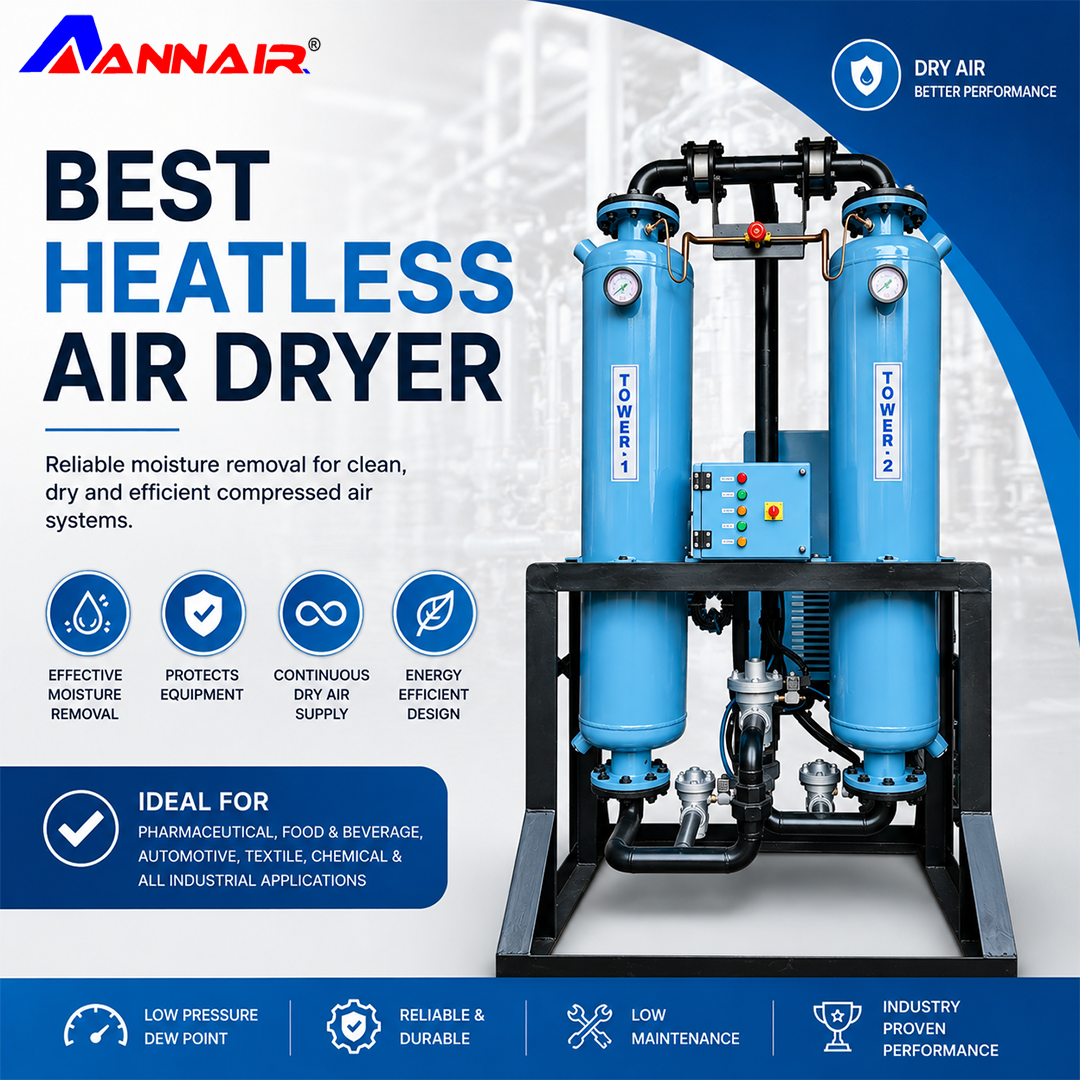
Best Heatless Air Dryer for Industrial Compressed Air Systems
Choosing the best heatless air dryer is important for industries that need clean, dry, and reliable compressed air without using external heat for regeneration. Moisture in compressed air can cause corrosion, product contamination, pneumatic equipment failure, and unexpected maintenance costs.
For manufacturing plants and process industries, a properly selected heatless air dryer can help maintain the required air quality while providing reliable drying performance.
Annir Drychill Tech India Pvt. Ltd. provides compressed air treatment solutions designed for industrial applications where dependable moisture removal and continuous operation are important.
What Is a Heatless Air Dryer?
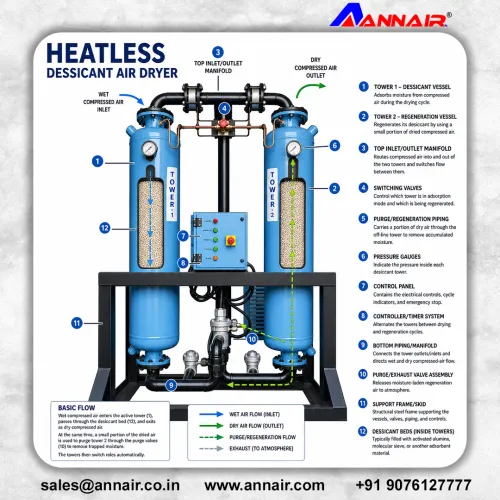
A heatless air dryer is a type of desiccant air dryer used to remove moisture from compressed air. It uses a moisture-absorbing desiccant material to dry the compressed air.
Unlike heated desiccant dryers, a heatless air dryer does not require an external heater for regeneration. A portion of the already dried compressed air is typically used to regenerate the desiccant in the off-line tower.
The dryer generally operates with two desiccant towers. While one tower dries the compressed air, the other tower undergoes regeneration. The towers then switch functions to provide continuous dry compressed air.
Why Choose the Best Heatless Air Dryer?
The right heatless air dryer can make a significant difference in the performance and reliability of a compressed air system.
1. Effective Moisture Removal
Compressed air contains water vapor. When this moisture condenses inside pipelines and equipment, it can create serious operational problems. A suitable desiccant dryer removes moisture to provide dry compressed air.
2. Suitable for Critical Applications
Heatless desiccant air dryers are commonly considered for applications where low-pressure dew points are required. They can be used in industries such as pharmaceuticals, food processing, electronics, chemicals, and manufacturing.
3. Protects Pneumatic Equipment
Moisture can damage pneumatic cylinders, valves, actuators, and other components. Dry compressed air helps reduce the risk of corrosion and moisture-related failures.
4. Helps Maintain Product Quality
Some manufacturing processes require dry compressed air to avoid moisture contamination. A properly sized dryer can help maintain consistent air quality for sensitive production processes.
5. No External Regeneration Heater
One of the main characteristics of a heatless air dryer is its regeneration method. Since regeneration does not depend on an external heater, the system can have a relatively simple operating arrangement.
6. Continuous Dry Air Supply
With alternating adsorption and regeneration cycles, the two-tower design allows the dryer to provide a continuous supply of dry compressed air when correctly selected and maintained.
Where Are Heatless Air Dryers Used?
Heatless air dryers are used across many industries where compressed air quality is important.
Typical applications include manufacturing plants, pharmaceutical production, food and beverage processing, chemical industries, electronics manufacturing, automotive plants, textile machinery, instrumentation systems, pneumatic automation, and other process industries.
The required dryer capacity and dew point depend on the application, compressed air flow, and operating conditions.
How to Select the Best Heatless Air Dryer
Buying a dryer based only on compressor horsepower is not enough. Several operating parameters should be checked before selecting equipment.
Air Flow
Determine the actual compressed air requirement in CFM or m³/min. Selecting a dryer that is too small can result in inadequate drying performance.
Required Pressure Dew Point
The required pressure dew point depends on the application. Standard industrial applications may have different requirements from pharmaceutical, instrumentation, or other critical processes.
Working Pressure
Check the normal and maximum operating pressure of the compressed air system. The dryer should be suitable for the required working pressure.
Inlet Air Temperature
High inlet compressed-air temperature can affect dryer performance. Always consider the actual operating temperature when selecting equipment.
Operating Environment
Ambient temperature, installation location, and ventilation can affect the performance and service life of the dryer.
Air Quality Requirements
Consider whether the application requires general moisture control or a very low pressure dew point. The dryer should be selected according to the actual air-quality requirement rather than simply choosing the largest available unit.
Benefits of Using a Heatless Air Dryer
A properly selected heatless air dryer can provide several practical benefits:
- Helps reduce moisture-related problems in compressed-air pipelines and equipment.
- Helps protect pneumatic components from corrosion and moisture damage.
- Supports applications requiring low-pressure dew point compressed air.
- Provides continuous dry-air operation through an alternating twin-tower design.
- Does not require an external electrical heater for desiccant regeneration.
- Can be used across a wide range of industrial compressed-air applications.
Heatless Air Dryer vs. Refrigerated Air Dryer
A refrigerated air dryer cools compressed air to condense and remove moisture, while a heatless desiccant dryer uses adsorption to remove moisture.
Refrigerated dryers are commonly used for general industrial applications where a standard pressure dew point is sufficient. Heatless desiccant dryers are generally considered when a lower pressure dew point is required.
Therefore, the best heatless air dryer is not necessarily the best choice for every compressed-air system. The correct technology depends on the required dew point, application, flow rate, and operating conditions.
Why Choose Annir Drychill Tech India Pvt. Ltd.?
Annir Drychill Tech India Pvt. Ltd. offers compressed air treatment solutions for industrial applications. When selecting an air dryer, the company focuses on important operating factors such as air flow, pressure, temperature, and required drying performance.
For industries looking for a suitable heatless air dryer, selecting the correct capacity and configuration is essential for dependable compressed-air treatment.
Conclusion
The best heatless air dryer is one that matches your compressed-air flow, operating pressure, inlet temperature, and required pressure dew point.
Before purchasing, evaluate your actual compressed-air requirements instead of selecting a dryer only by compressor size. The right dryer can help protect pneumatic equipment, control moisture, and maintain reliable compressed-air quality.
If you are planning to install or replace a desiccant air dryer, contact Annir Drychill Tech India Pvt. Ltd. to discuss your application and compressed-air requirements.
Frequently Asked Questions
What is a heatless air dryer?
A heatless air dryer is a desiccant-type compressed air dryer that removes moisture using an adsorption process. It regenerates the desiccant without using an external regeneration heater.
What is the main benefit of a heatless air dryer?
Its main benefit is its ability to produce dry compressed air suitable for applications requiring a lower pressure dew point than conventional refrigerated drying can typically provide.
Is a heatless air dryer suitable for industrial applications?
Yes. Heatless desiccant dryers can be used in manufacturing, pharmaceutical, chemical, food processing, electronics, automotive, and other industries where dry compressed air is required.
How do I choose the best heatless air dryer?
Consider compressed-air flow, working pressure, inlet temperature, required pressure dew point, ambient conditions, and the specific application before selecting a dryer.
Does a heatless air dryer use electricity?
The dryer does not require an external electric heater for desiccant regeneration. However, electrical power may still be required for controls, valves, or other components depending on the dryer design.
What happens if the air dryer is undersized?
An undersized dryer may not provide the required drying performance. Excess moisture can then enter the compressed-air network and affect downstream equipment and processes.
How often should a heatless air dryer be serviced?
Service intervals depend on the dryer design, operating conditions, desiccant condition, and manufacturer recommendations. Regular inspection of valves, filters, drains, and desiccant performance is recommended.
Can a heatless air dryer remove all moisture from compressed air?
No drying system should be described as removing absolutely all moisture. A properly selected desiccant dryer can achieve a specified pressure dew point suitable for the application.