
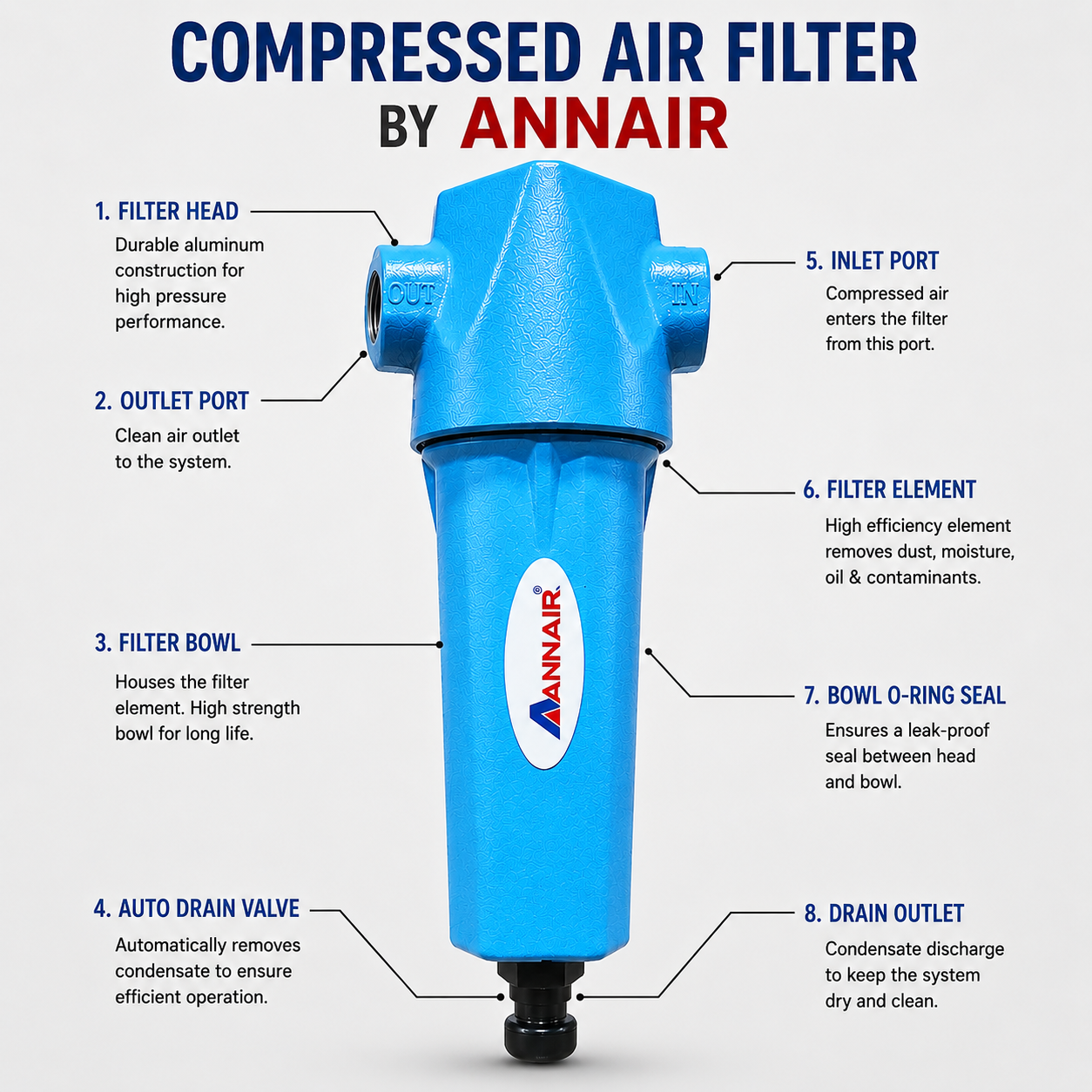
Compressed Air Filters: Working & Key Components Explained
If you run a compressor room in Mumbai, Thane, Bhiwandi, or anywhere in the MIDC belt, you already know that raw compressed air is never clean. It carries moisture, oil carryover from the compressor, and fine dust pulled in from the intake. Compressed air filters are the equipment that deals with this before the air reaches your machines, tools, or control panels. This article walks through how a compressed air filter actually works, what's inside it, where different types are used, and what usually goes wrong on the shop floor.
How Does a Compressed Air Filter Work?
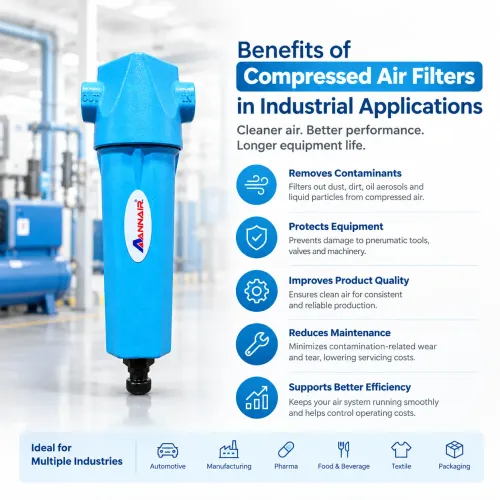
A compressed air filter cleans the air stream as it passes through, using one or more of three mechanisms depending on the filter type.
Particulate filters trap solid contaminants—rust flakes, pipe scale, dust—by forcing air through a porous element that physically blocks particles larger than its rated micron size.
Coalescing filters handle liquid contaminants such as fine oil and water aerosols. Air is pushed through a fibrous media (often glass fiber), and the tiny droplets collide with the fibers and merge into larger droplets. Once heavy enough, these droplets fall to the bottom of the filter bowl and are drained away, leaving the air noticeably drier and oil-free.
Activated carbon (adsorption) filters go a step further. They remove oil vapors and odors that coalescing filters can't catch, using carbon's porous surface to hold onto gaseous hydrocarbons as air passes through.
In most plants, these aren't used in isolation—a particulate pre-filter, a coalescing filter, and sometimes a carbon filter are installed in sequence, each handling a specific contaminant. This staged approach is far more effective than expecting one filter to do everything.
Key Components of a Compressed Air Filter
Understanding the parts helps when you're troubleshooting or specifying a replacement.
Filter Housing and Bowl
The housing holds the internal element and directs airflow through it. The bowl at the bottom collects condensate and separated liquid. On plants near coastal humidity—common across the Mumbai and Navi Mumbai region—bowl material and seal quality matter more than people expect, since higher ambient moisture means more condensate to handle.
Filter Element
This is the actual filtration media—pleated paper or synthetic fiber for particulates, borosilicate glass fiber for coalescing duty, or activated carbon cartridges for vapor removal. The element is a wear part and needs periodic replacement.
Differential Pressure Indicator
Most industrial-grade filters include a gauge or indicator showing the pressure drop across the element. A rising differential pressure tells you the element is loading up with contaminants and is due for replacement — this is one of the simplest and most reliable maintenance signals available.
Drain (Manual or Automatic)
Coalescing filters need a way to remove collected liquid. Manual drains work but rely on someone remembering to open them. Automatic drains — float-operated or timer-based — are more consistent, especially in unmanned compressor rooms or on night shifts.
Types of Compressed Air Filters and Where They're Used
- Particulate filters are typically placed downstream of desiccant dryers to catch any residual dust, protecting CNC and VMC spindle air, pneumatic cylinders, and solenoid valves from wear.
- Coalescing filters are used wherever oil-free or near-dry air matters—spray painting, packaging lines, and general workshop air where oil carryover would spoil the product or clog nozzles.
- Activated carbon filters are added when odor or trace oil vapor is unacceptable, such as in food-contact packaging or instrumentation air feeding sensitive sensors.
Electrical panel manufacturers and automation OEMs in Bhiwandi, Dombivli, Kalyan, and Ambernath often specify a coalescing-plus-particulate combination ahead of pneumatic control systems, since even small amounts of oil mist can affect relay contacts and control components over time.
Common Problems and Practical Fixes
A high pressure drop across the filter usually means the element is saturated or clogged. Check the differential pressure gauge regularly rather than waiting for a production issue to flag it.
Oil or water still reaching downstream equipment often points to an undersized filter, the wrong micron rating for the application, or a coalescing filter installed without a working drain.
Frequent element replacement can indicate the compressor itself is generating excess oil carryover or that the filter is undersized for the actual flow rate (CFM) passing through it. Filters sized too small wear out faster and lose efficiency.
Drain failure leading to liquid carryover — a common issue with manual drains left closed by mistake. Automatic drains reduce this risk considerably.
How to Choose the Right Compressed Air Filter
A few practical points before finalizing a filter:
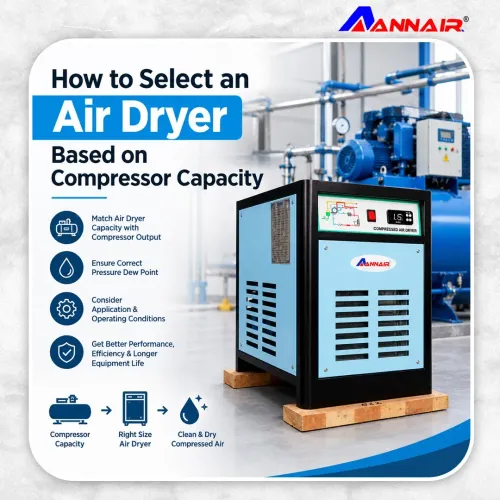
- Match the flow rate. A filter rated below your compressor's actual CFM output will restrict airflow and wear out faster.
- Check the micron rating against your application. CNC/VMC and general pneumatics usually need coarser particulate filtration than instrumentation or paint-grade air.
- Reference ISO 8573-1 if your process has a defined air purity requirement. The standard classifies compressed air purity across particles, water, and oil and gives buyers and suppliers a common language for specifying what "clean air" actually means for a given application.
- Plan for maintenance access. A filter that's hard to reach for element changes or drain checks tends to get neglected.
- Work with a supplier who understands your process, not just the filter itself. As a compressed air filter manufacturer and compressed air filter supplier in India, ANNAIR Drychill Tech (India) Pvt. Ltd. works with manufacturing units, OEMs, and maintenance teams across Mumbai, Thane, Navi Mumbai, and Taloja, as well as clients in the UAE, to match filtration to actual plant conditions rather than a generic spec sheet.
FAQs
What is the difference between a particulate filter and a coalescing filter?
A particulate filter removes solid contaminants like dust and rust by physically blocking them. A coalescing filter removes liquid aerosols — oil and water droplets — by merging small droplets into larger ones that drain away. They're often used together, not as substitutes for each other.
How often should a compressed air filter element be replaced?
It depends on air quality, load, and ambient conditions, so there's no single fixed interval. The differential pressure indicator is the most reliable guide—a steadily rising pressure drop signals the element needs changing.
What micron rating do I need for CNC/VMC machines?
This depends on the specific pneumatic components and spindle air requirements of the machine, so it's worth checking the machine manufacturer's air quality specification rather than assuming a standard rating fits every model.
Can one filter remove both water and oil from compressed air?
A coalescing filter handles both liquid water and oil aerosols in the same pass, since both exist as fine droplets in the air stream. Oil vapor, however, needs an activated carbon filter downstream.
What causes a sudden pressure drop across a filter?
Usually a clogged or saturated element, though a damaged element or an oversized flow demand relative to the filter's rating can also cause it. Check the differential pressure gauge trend rather than reacting to a single reading.
Is a compressed air filter enough, or do I also need a dryer?
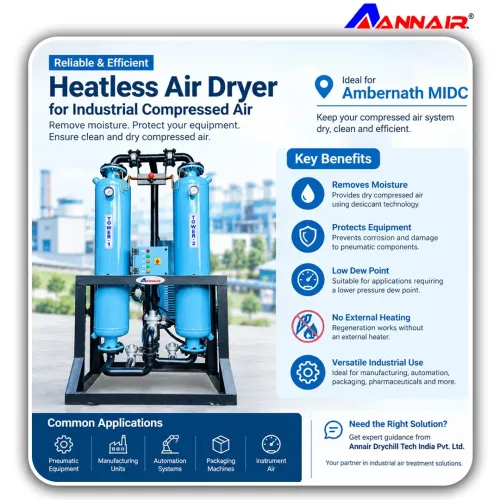
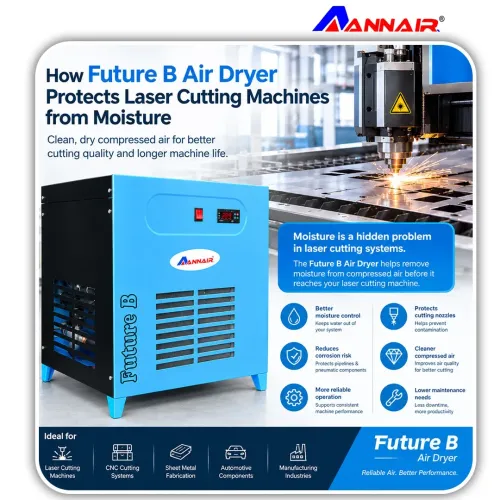
Filters remove particulates, oil, and liquid moisture, but they don't lower the air's dew point. If your process is sensitive to humidity—many electrical panel and automation applications are—a refrigerated or desiccant air dryer is typically used alongside filtration, not instead of it.
How do I choose between local sourcing in Mumbai and importing filters?
Local sourcing generally means faster element availability, easier servicing, and quicker responses for breakdowns—a practical advantage for plants running multi-shift production. It's worth weighing this against any specific technical requirement that might only be met by an imported product.
Conclusion
Compressed air filters aren't a single product—they're a combination of housing, element, drain, and indicator, each doing a specific job to keep your air clean. Understanding how compressed air filters work and what their key components do makes it easier to select the right type, catch problems early, and avoid downstream damage to machines and panels. For manufacturing units, OEMs, and maintenance teams across Mumbai and the surrounding industrial belt, getting this right is less about buying a filter and more about matching filtration to your actual process conditions.
If you'd like help specifying the right compressed air filter for your setup, ANNAIR Drychill Tech (India) Pvt. Ltd. can review your application and recommend a suitable configuration.