
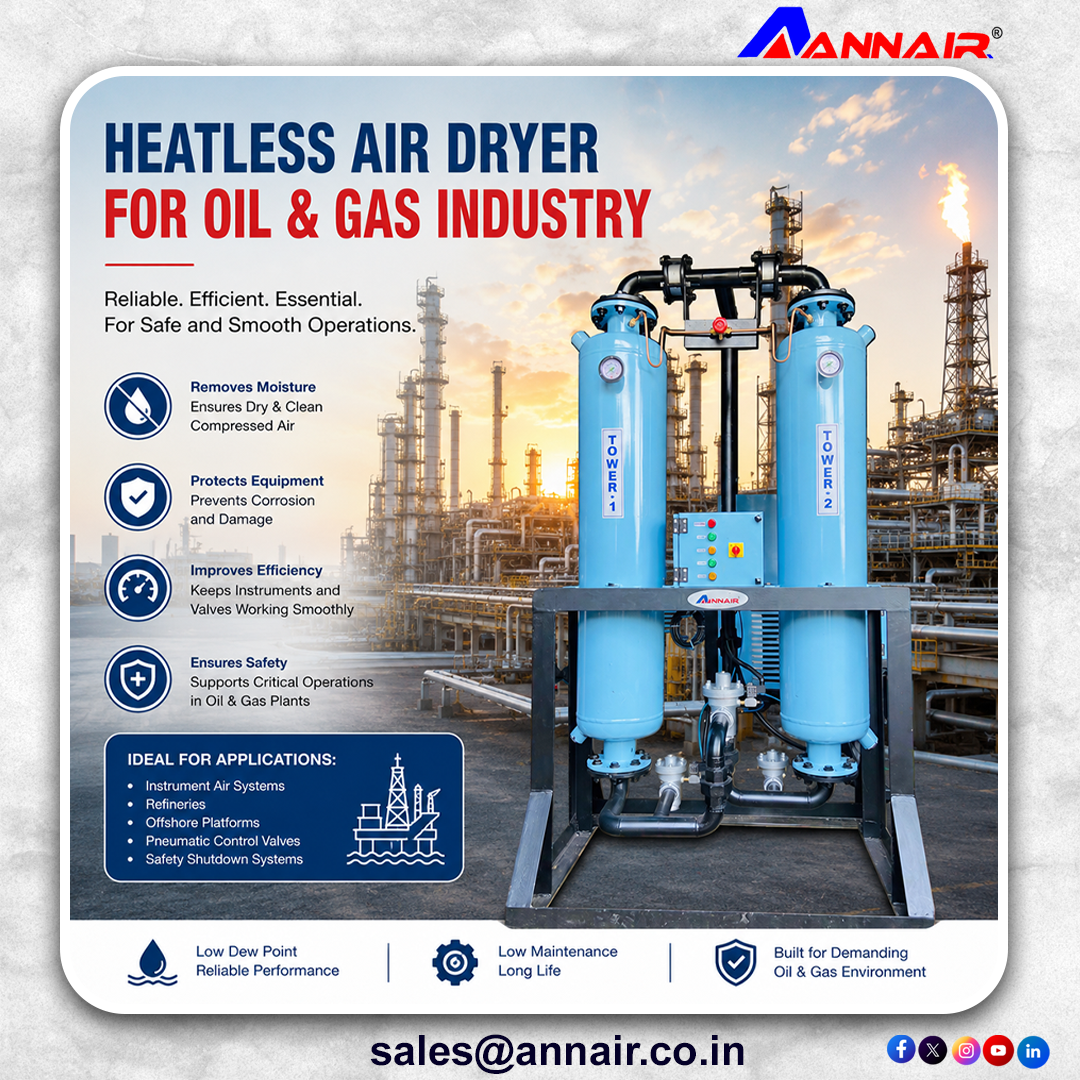
Why are heatless air dryers essential in the oil and gas industry?
In the demanding and challenging world of oil and gas, equipment reliability isn't just a necessity; it's about safety, efficiency, and billions in profits.
Compressed air systems are the behind-the-scenes heroes of this entire process, powering pneumatic tools, control valves, and instrumentation. Whether it's upstream oil exploration, midstream pipeline transport, or downstream refinery operations.
But compressed air has one of its biggest enemies: moisture.
To combat this moisture, heatless desiccant air dryers have become the standard across the industry. Let's find out why.
Main Problem: Moisture Hazard
When air is compressed, the water vapor in it condenses into water droplets. If this moisture gets into your plumbing or sensitive equipment, it can cause significant damage:
Corrosion: Water can cause corrosion of expensive pipes and pneumatic parts.
Jamming: In cold areas or under high pressure, this moisture can freeze inside the pipes, completely blocking control lines.
Product Defects: If water mixes with process gases, product quality can be compromised.
How do heatless air dryers work?
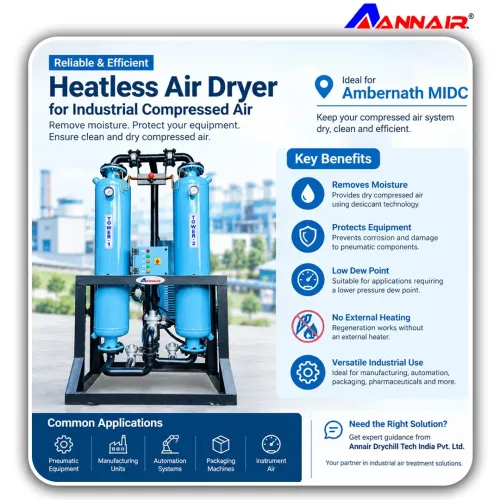
Unlike refrigerated dryers (which cool the air to only 3°C) or heated dryers (which use hot air), heatless dryers operate using pressure swing adsorption (PSA) technology. This dryer consists of two towers filled with a desiccant (such as activated alumina).
Tower 1 (Online): Wet compressed air passes through this tower, and the chemicals absorb all the moisture. The air that exits is completely dry (Pressure Dew Point: -40°C to -70°C).
Tower 2 (Regeneration): A small portion of the same dry air is passed through this tower without any heat, which absorbs the moisture and regenerates it for reuse.
Switching: Both towers operate automatically in alternating cycles, so the air flow never stops.
4 Key Reasons Why It's Essential in the Oil & Gas Industry
1. Best for Extremely Cold and Harsh Weather
Oil and gas plants are often located in extreme weather conditions—such as offshore rigs or extremely cold areas. Refrigerated dryers fail in sub-zero temperatures. However, heatless dryers offer a dew point of up to -70°C, eliminating the risk of water freezing inside pipelines.
2. Maximum Safety in Hazardous Zones
Safety is a top priority in oil and gas plants. Heated dryers use heaters or steam lines, which pose a risk of fire or explosion
Advantages of Heatless: Because these dryers operate solely on pressure changes and have no heater, they are completely spark-free and explosion-proof.
3. High Reliability and Low Maintenance
Frequent maintenance is often difficult in plants located in remote locations or at sea. Heatless dryers have very few moving parts (only a few valves and an electronic controller). There's no hassle of a heater burning out or a heating element failing, allowing for years of uninterrupted operation.
4. Instrument-Quality Air Supply
According to International Society of Automation (ISA) regulations, instrument air must be of extremely pure quality. Heatless dryers easily meet these stringent standards, preventing damage to your expensive and sensitive automatic valves and transmitters.
Conclusion
In the oil and gas sector, even a single valve failure due to moisture can shut down an entire production plant, resulting in losses worth millions every minute. Investing in a robust and heavy-duty heatless air dryer is like a great insurance policy for your entire infrastructure. It provides you with the safety, precision, and reliability that this industry demands.
Contact Us
Get a free consultation from our experts today and ensure the quality of your products.
📞 Phone: +91 9076127777
📧 Email: sales@annair.co.in
🌐 Website: www.annair.com